October 11, 2025 · 1 min read
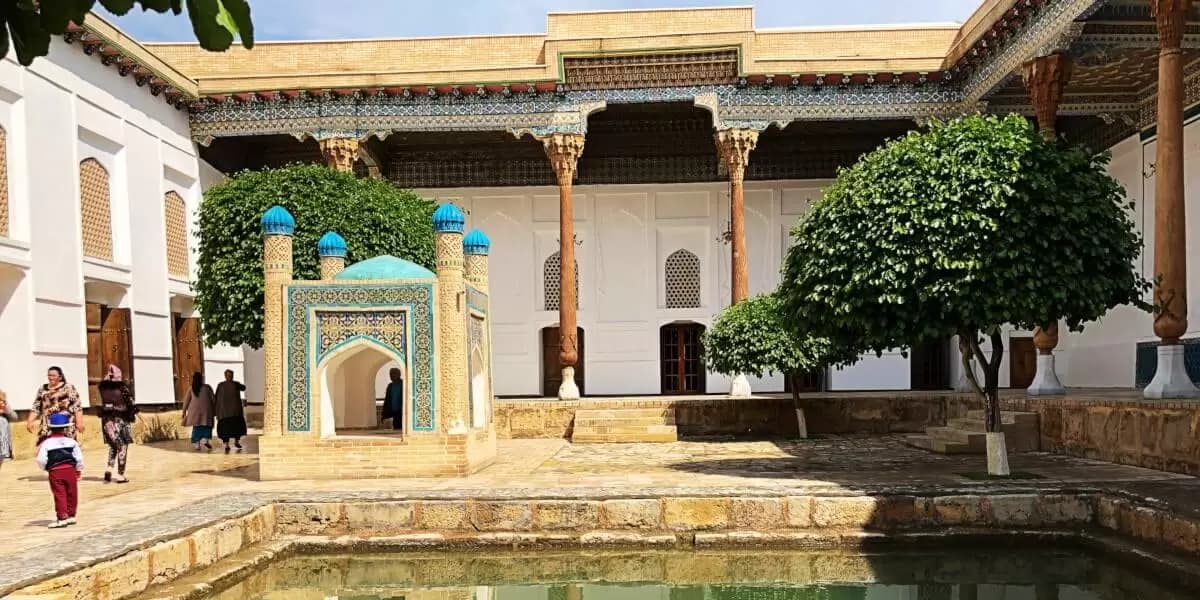
Bahauddin Naqshband Kagan is where faith, quiet craftsmanship, and Central Asian light meet. A short ride from Bukhara, the shrine’s courtyards breathe with the rhythm of pilgrims: hands brushed across cool stone, whispered prayers threading the air, doves startled into brief spirals above turquoise domes. Shade gathers beneath ancient trees, and carved beams glow like honey in the afternoon sun. Here, the Naqshbandi principle feels tangible: heart with the Beloved, hands at work—devotion expressed in the simplest, most attentive acts. Come at dawn, when the complex is a hush of saffron light, or at dusk, when lamps flicker and the day’s heat dissolves. You don’t just see the shrine—you move through it, as if through a living, breathing poem.
Baha-ud-Din Naqshband (1318–1389) founded one of the world’s most influential Sufi paths. His teachings emphasize sobriety, service, and remembrance in the midst of daily life—“Dil ba yâr, dast ba kâr” (Keep your heart with the Friend while your hand works). The shrine near Kagan has long been a place of ziyarah, where travelers seek clarity, gratitude, and a steadier step on their way.
The shrine lies roughly 20–30 minutes from Bukhara and the railway town of Kagan by taxi. Combine it with the old city’s highlights for a balanced day of architecture and contemplation.
For curated, hassle-free journeys around Bukhara and Kagan, explore Minzifa Travel’s routes and experiences