October 10, 2025 · 1 min read
Gijduvan School of Ceramics in Uzbekistan
The soul of clay in the Bukhara oasis
The Gijduvan School of Ceramics is where desert earth learns to sing. For centuries, artisans in this Bukhara-region town have shaped clay into generous platters and luminous bowls, glazing them in warm ochres, bottle greens, and deep turquoise that recall caravan evenings and saffron dawns. Each piece is a quiet story: precise geometric girih, flowing islimi vines, and stylized pomegranates—symbols of abundance—spiral across the surface with confident, time-tested rhythm.
What makes Gijduvan unique is the balance of restraint and bravado. Forms are sturdy, useful, and human; decoration is bold yet measured. You’ll see the hand of the master in the brush’s slight tremor, the kiln’s kiss in faint smoke shadows, the region’s memory in the palette drawn from local minerals.
- Clay prepared by soaking, wedging, and aging for elasticity
- Wheel-throwing that favors generous, open shapes for shared meals
- Engobes and mineral glazes layered for depth and warmth
- Firing in traditional kilns that gifts subtle, living variations
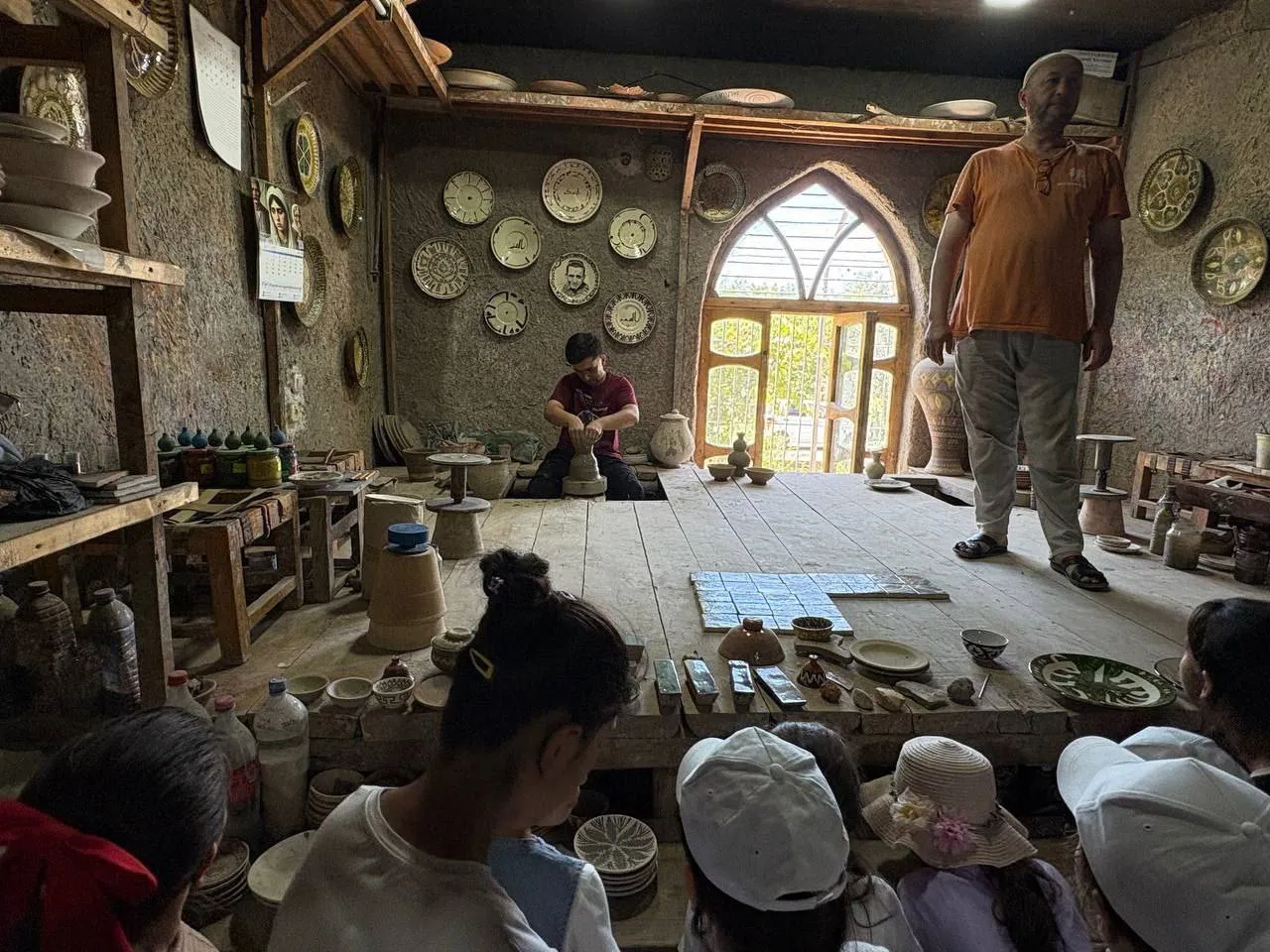
Visit a family atelier to watch a vessel rise from a spinning axis, then try a brush yourself: a dot becomes a star, a curve becomes a vine. It’s not just pottery—it’s a conversation with Central Asia’s caravan past, kept alive in the steady breath of a kiln and the soft scrape of a wooden rib. Hold a Gijduvan plate, and you hold hospitality itself—sturdy, sunlit, and made to be used.