October 8, 2025 · 1 min read
Savitsky Museum in Nukus: Hidden Avant-Garde
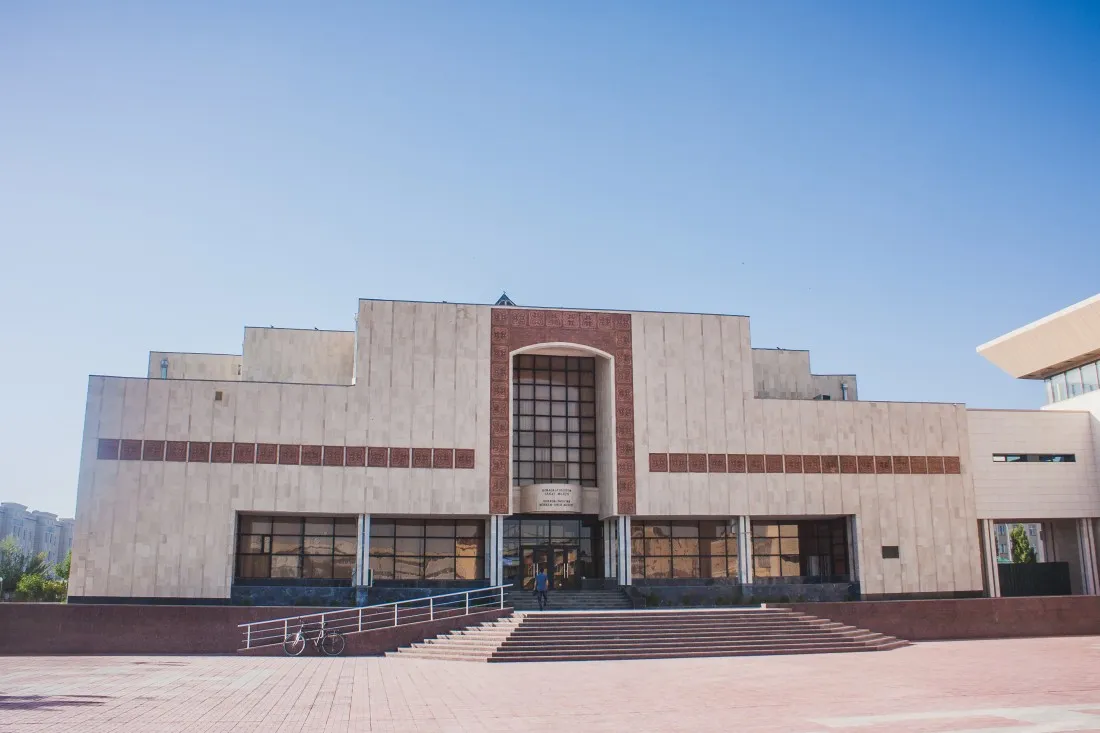
Tucked away in the windswept capital of Karakalpakstan, the Savitsky Museum in Nukus is a paradox: a world-class treasury of rebellious art standing quietly at the edge of the desert. Rescued from censorship by the visionary Igor Savitsky, thousands of works by artists once erased from Soviet history found sanctuary here, side by side with luminous Karakalpak textiles, jewelry, and ceramics. Step inside and the steppe hush dissolves into color storms—angular workers glowing like embers, dreamlike horizons, folk motifs recoded into modernism. The building feels like a vault and a lighthouse at once: preserving what others tried to extinguish, broadcasting it to anyone curious enough to come this far.
Why it matters
- A rare concentration of Russian and Central Asian avant‑garde that survived political purges.
- A living dialogue between modernist experimentation and indigenous Karakalpak craft.
- A testament to cultural courage: collecting, restoring, and safeguarding against the odds.
What to look for
- Early 20th‑century canvases that bend geometry into emotion and labor into myth.
- Ethnographic halls where patterned felt, silver amulets, and yurt ornaments echo with everyday poetry.
- Quiet masterpieces by “lost” artists, their signatures resurfacing like oases after a long drought.
How to experience it
- Start upstairs with the avant‑garde galleries to feel the spark, then descend to the folk art to find its roots.
- Linger on the juxtapositions: a constructivist composition beside a carpet’s lattice; a portrait framed in the cadence of the steppe.
- If possible, take a guided tour—the museum’s stories are as vital as its canvases.
Practical notes
- Allow 2–3 hours; more if you like to read labels and chase threads.
- Weekday mornings are calmer; bring a light layer—the halls keep a steady cool.
In Nukus, art didn’t just survive—it learned to whisper across sand and time, and then to sing.