October 9, 2025 · 1 min read
Chor Minor: Four-Towered Enigma of Bukhara
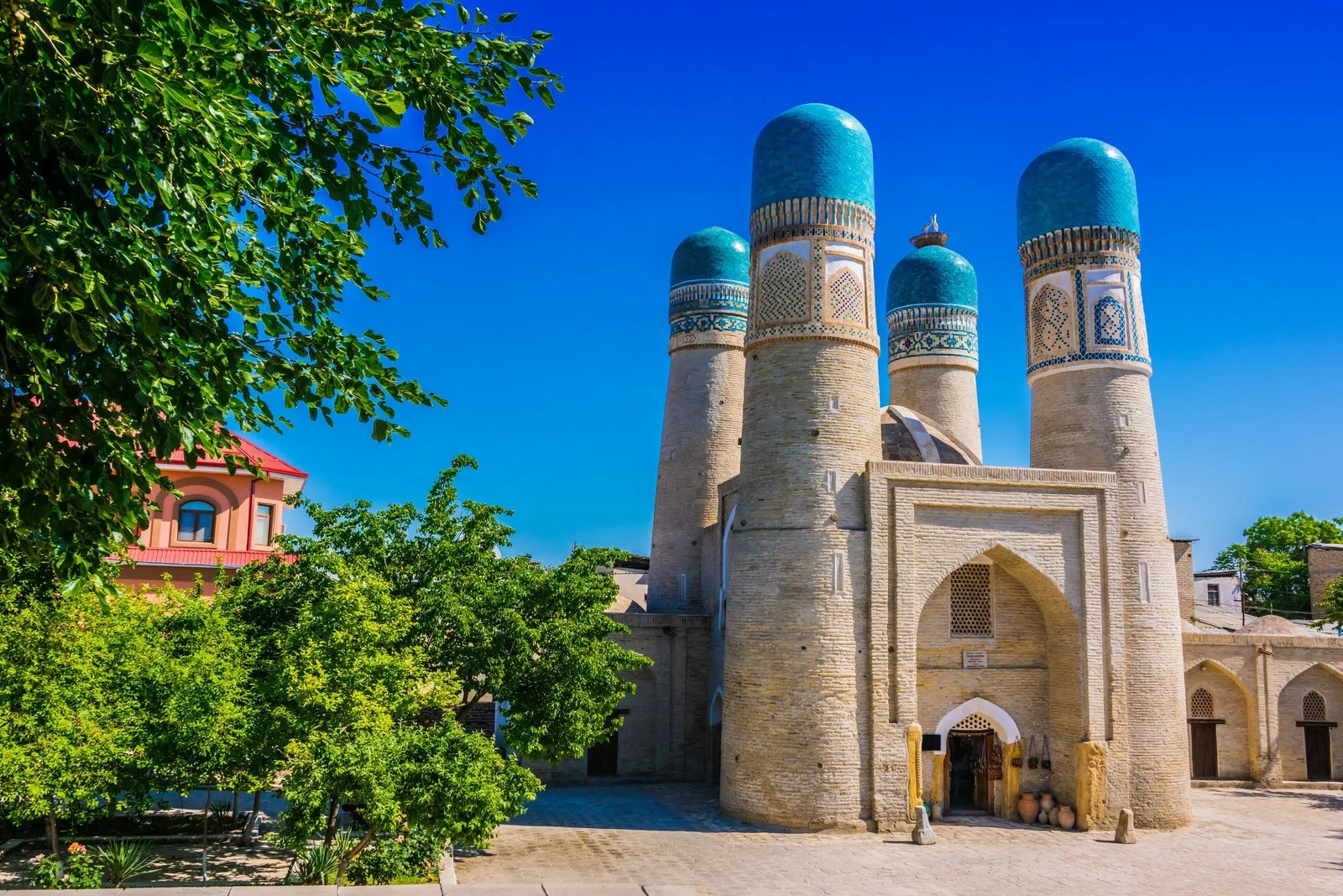
Hidden on a quiet lane of Bukhara’s old town, Chor Minor looks like a mirage: four cerulean-capped towers rising from a compact cube, as if a caravan dream took shape in brick and tile. Despite its name—“Four Minarets”—these slender turrets are not for calling the faithful to prayer. They crown the gatehouse of a vanished madrasa, commissioned by the merchant Khalif Niyazkul in the early 1800s, a final flourish of Central Asian ingenuity.
Each tower carries a different decorative motif, birthing legends that they symbolize four faiths, four winds, or four corners of the Silk Road. The truth is simpler and no less magical: an architect’s playful dialogue between geometry, light, and turquoise glaze. Step inside and you’ll find an intimate chamber where the hush lingers; outside, the brickwork catches sunset like warm honey.
Practical notes for a serene visit:
- Best light at sunrise or late afternoon—shadows carve depth into the relief.
- Dress modestly and keep voices low; parts remain a place of devotion.
- Bring small cash for local crafts or voluntary contributions.
- Wander on foot from Lyabi-Hauz to feel the rhythm of the mahalla.
Chor Minor isn’t grand; it’s unforgettable—four gentle beacons that turn a side street into a story you’ll carry long after the dust settles.