October 9, 2025 · 1 min read
Ismail Samani Mausoleum in Bukhara
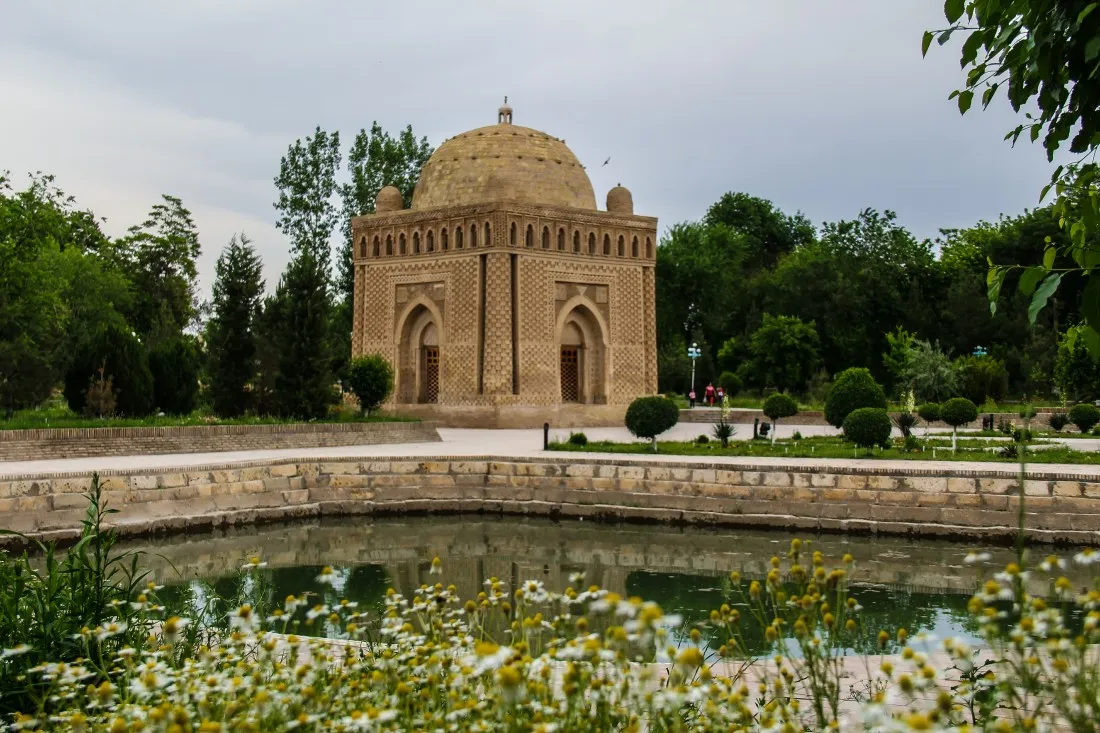
A honey-toned cube rises from the greenery of Bukhara’s parkland, modest in size yet monumental in presence. The Ismail Samani Mausoleum, built at the turn of the 10th century for the Samanid dynasty, distills early Islamic architecture into a perfect meditation on form, light, and memory.
Its geometry is disarmingly pure: a near-perfect square crowned by a rounded dome, four equal facades framing deep arches. Each surface is woven from baked brick—turned, tilted, and interlaced into intricate patterns that read like a quiet scripture. As the sun moves, the masonry becomes a living lattice; shadows slide across diamonds and chevrons, revealing new motifs each hour.
Inside, subtle squinches lift the eye from square base to celestial curve, an elegant transition that feels both structural and symbolic. Pre-Islamic echoes mingle with Islamic restraint, creating a synthesis that later inspired the great Timurid builders. Remarkably, the mausoleum survived the Mongol devastations—local lore says it was shielded by cemetery mounds and time’s own sands—so what you see is largely original.
Look for:
- The four “doors”: only one is functional; the others balance the facade.
- Brickwork that changes with light—visit at sunrise or sunset for the full effect.
- The intimate scale: step close to read the craftsmanship in every course.
Visiting the Samani Mausoleum is less a checklist stop than a conversation across centuries—quiet, precise, and unexpectedly moving.