February 26, 2026 · 1 min read
Poetry in Motion: The Three Schools of Uzbek Dance
If the monuments of Uzbekistan are its bones, then dance is its breath. In twenty twenty-six, Uzbek national dance remains a living, breathing art form, categorized into three distinct "schools" that are as different as the landscapes they come from. Each school is a unique dialect of movement, telling stories of love, nature, and the divine.
1. The Fergana School: The Lyrical Whisper
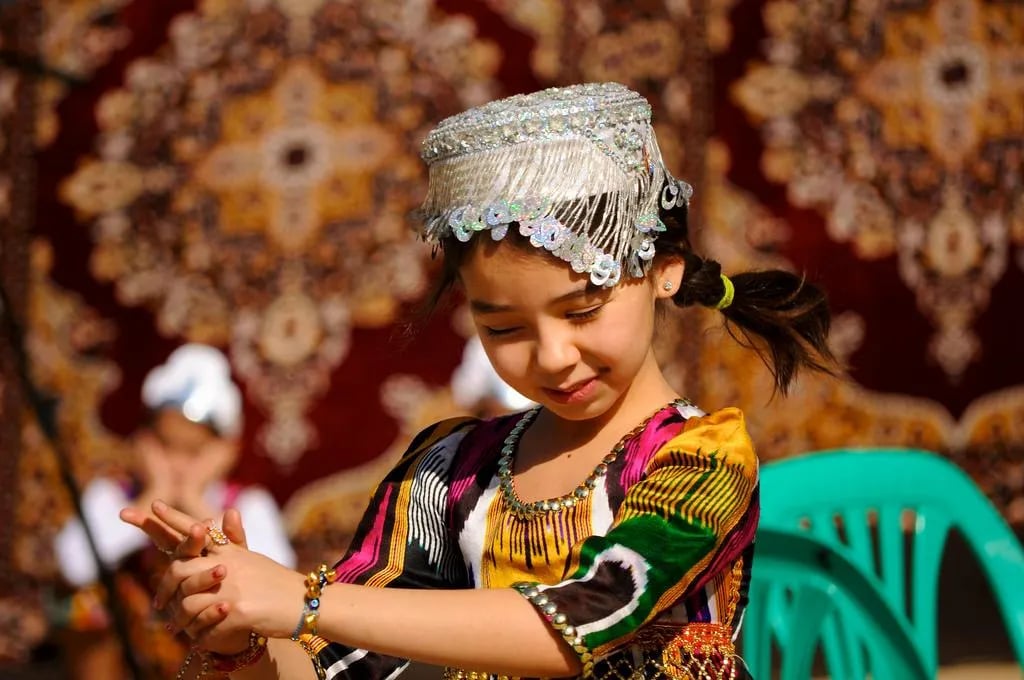
The Fergana Valley is a land of gardens and poets, and its dance reflects this refinement. It is the most "feminine" and graceful of the three schools.
- The Movement: Characterized by "serpentine" hand movements and a light, gliding step. A signature rule of the Fergana school is that the palms always face upward, symbolizing openness and a connection to the heavens.
- The Expression: Unlike the high-energy styles, Fergana dance is subtle. It focuses on the play of the eyes and a coquettish tilt of the head. It is a dance of human relationships—romance, longing, and nobility.
- Famous Piece: Tanovar—a soulful dance that expresses the inner world and "the delight of the soul."
2. The Bukhara School: The Aristocratic Spark
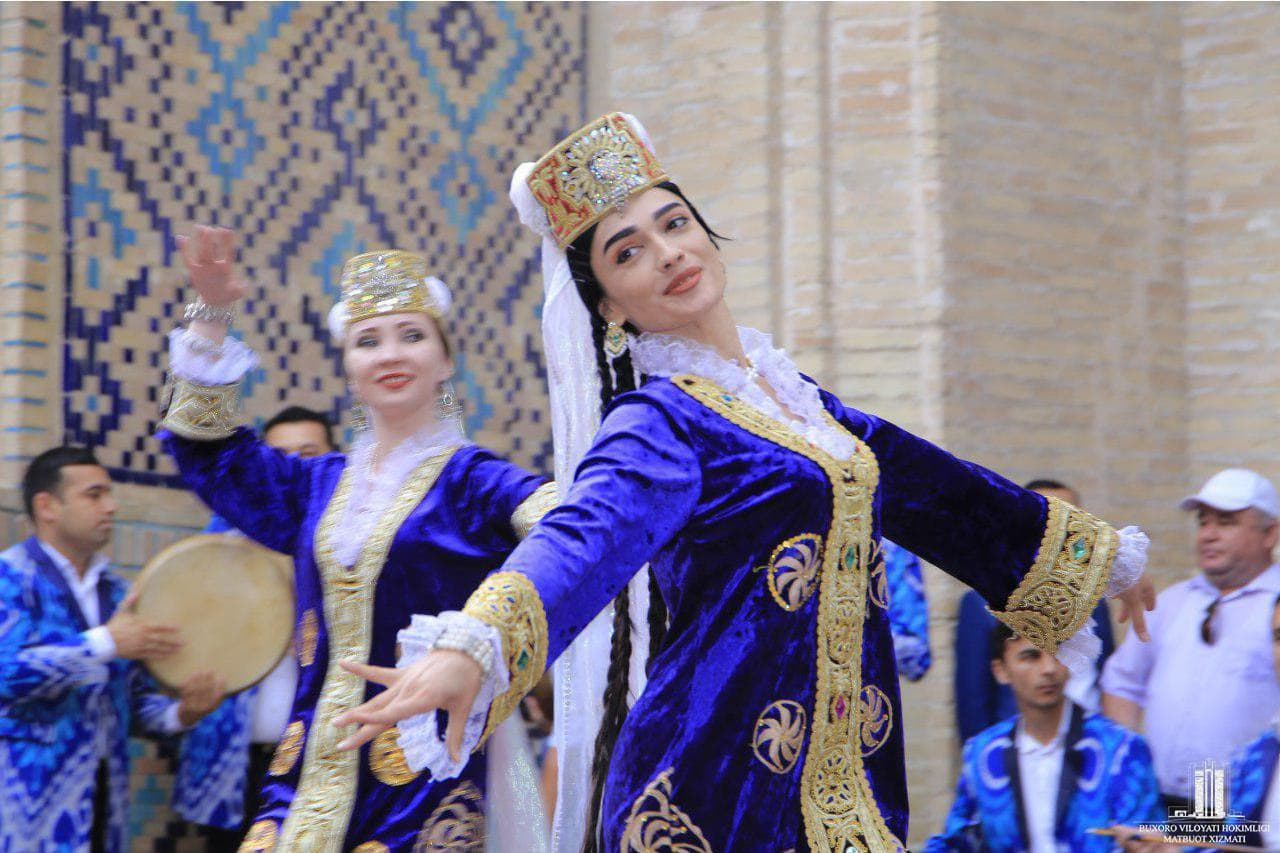
Bukhara’s dance is the dance of the royal courts. It is sophisticated, complex, and carries a visible weight of history.
- The Movement: There is a heavy emphasis on the upper body—the shoulders, neck, and chest. It features "backbends" and acrobatic rotations that require immense strength and flexibility.
- The Accessories: Dancers often wear zang (small bells) on their wrists and carry qayroq (stone castanets). The clicking of the stones and the jingling of the bells aren't just background noise; they are part of the rhythmic composition.
- The Costume: Famous for the heavy, gold-embroidered zardozi robes that catch the light with every spin, reflecting the city’s status as a center of luxury.
3. The Khorezm School: The Fiery Tremble
Khorezm dance is prehistoric, raw, and full of "stormy energy." It feels less like a performance and more like a ritual.
- The Lazgi: The crown jewel of Khorezm. Included on the UNESCO list of Intangible Heritage, the Lazgi starts with a slow "awakening" of the fingers and wrists before exploding into a full-body "tremble."
- Nature in Motion: The choreography often mimics the movements of birds, fish, or the swaying of the Amu Darya river. It is sharp, rhythmic, and avoids the smooth rotations of the other two schools.
- The Vibe: In twenty twenty-six, a Khorezm performance is the highlight of any festival. It is ecstatic, joyous, and often involves incredible feats of balance, like dancing with fire or on a tightrope.
Witness the Dance with Minzifa Travel In twenty twenty-six, you don't just "watch" a dance in Uzbekistan—you experience it as part of the atmosphere of the Silk Road. Minzifa Travel ensures you have the best seat in the house.
- Folklore Evenings: We curate special evening performances at the Nadir Divan-Begi Madrasah in Bukhara, where all three schools are showcased against a backdrop of 17th-century architecture.
- Backstage Access: Ever wonder how those intricate costumes are made? We arrange visits to the costume ateliers where the heavy gold embroidery and hand-painted silks are brought to life.
- The Lazgi Masterclass: For those who want to feel the "tremble" themselves, we organize private workshops in Khiva where you can learn the basics of the Lazgi from descendants of the great dance dynasties.
Every movement tells a story. Are you ready to learn the language?