August 27, 2026 · 1 min read
Uzbekistan With Children: What Ages Enjoy What?
Uzbekistan can be a surprisingly good family destination — but a 5-year-old and a 15-year-old will experience the Silk Road very differently. The secret is not trying to make children enjoy the same trip as adults. It is choosing experiences that work for their age, energy and curiosity. From fortress-like old cities and camel rides to crafts, bazaars and astronomy, here is what tends to work best at different ages.
Ages 3–5: Keep It Visual and Simple
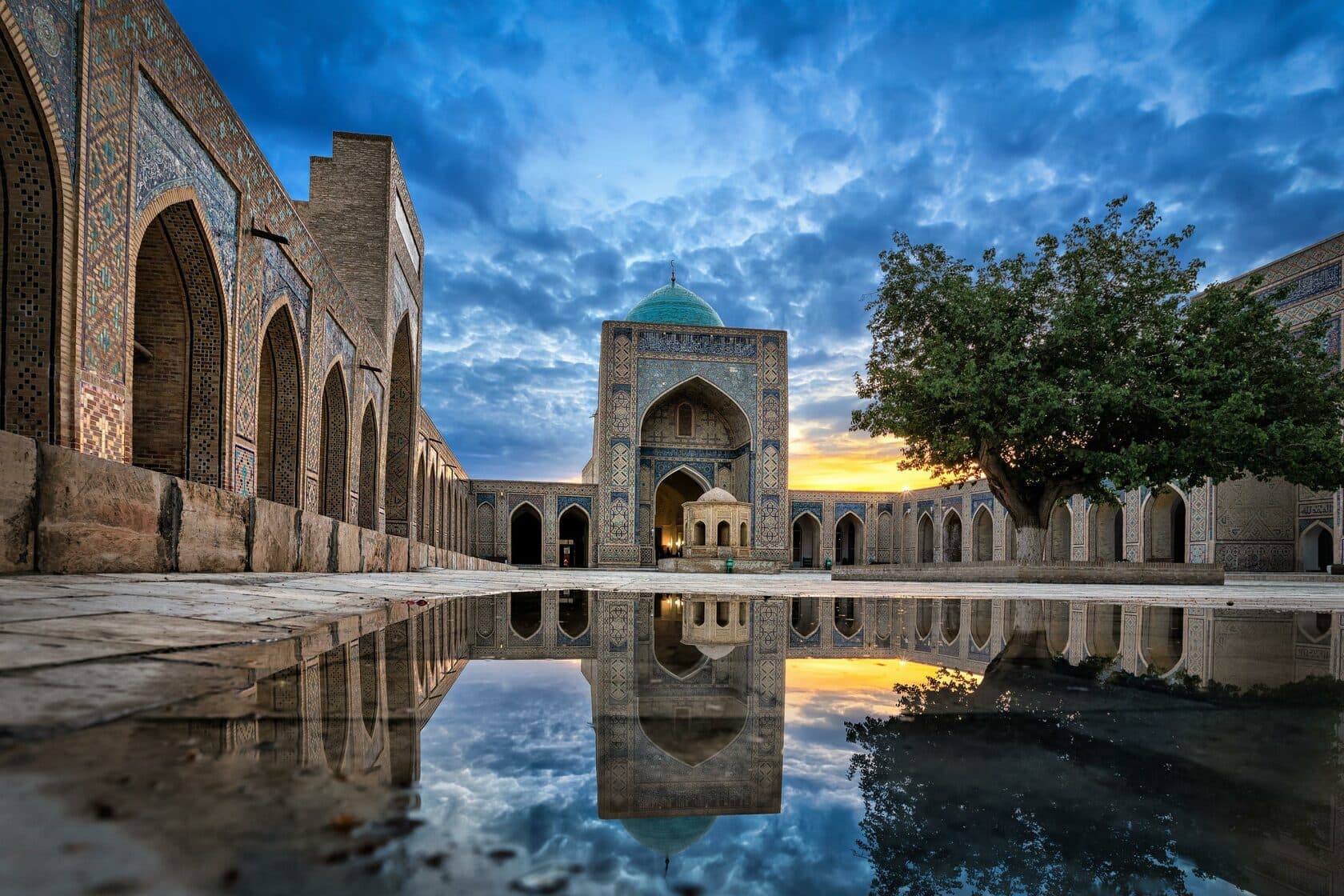
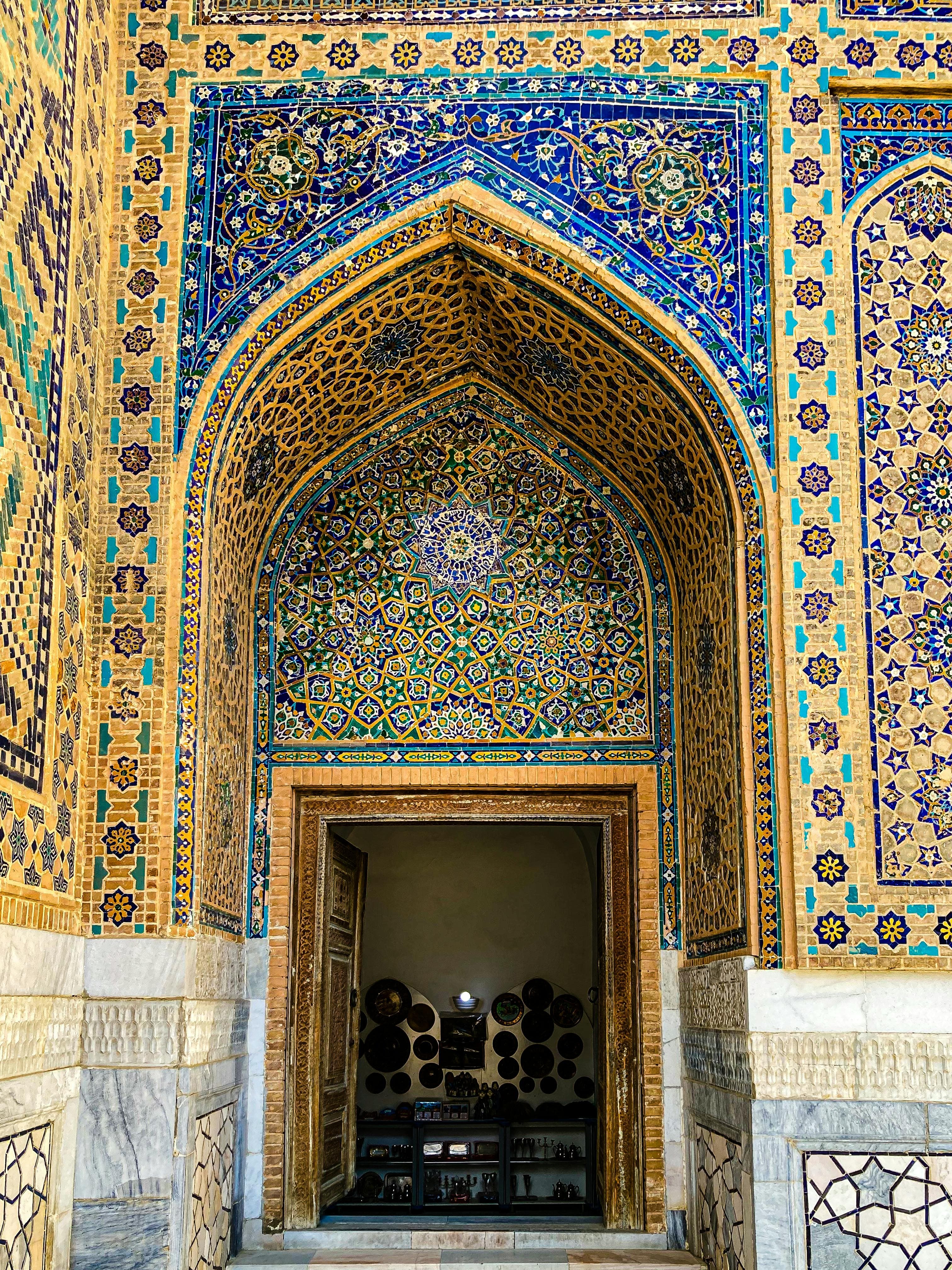
Young children are unlikely to care which dynasty built a madrasa. They may, however, love its enormous blue doors.
For preschool-age travelers, Uzbekistan works best when sightseeing is short and highly visual.
Think:
- colorful bazaars;
- fountains and parks;
- puppet shows;
- bread and sweet treats;
- short walks through Khiva;
- plenty of time to run and rest.
Khiva can be particularly fun because the walled old city feels almost like a giant castle. Minzifa Travel's family guide also highlights Khiva's walls and narrow lanes as an experience that can bring Silk Road history to life for children.
At this age, one impressive monument is better than five similar ones. Build the day around naps, meals and breaks rather than a long sightseeing checklist.
Ages 6–8: The Silk Road Becomes an Adventure
This is often the age when Uzbekistan starts becoming genuinely exciting.
- The Ark Fortress in Bukhara can become a real-life castle.
- Khiva becomes a maze to explore.
- A train between cities becomes part of the adventure rather than simply transportation.
- Children can start engaging with simple stories about merchants, kings, explorers and the Silk Road without needing a history lecture.
Hands-on experiences work especially well:
camel rides, traditional crafts, local markets, cooking and a night in a yurt.
Minzifa Travel's From Urban to Rural Uzbekistan combines Tashkent, Samarkand and Bukhara with rural experiences, local families, artisans, camel rides and traditional yurt stays — exactly the kind of variety that can prevent younger travelers from developing “monument fatigue.”
Ages 9–12: Probably the Sweet Spot
For many families, this is one of the easiest ages for Uzbekistan.
Children are old enough to understand the stories behind the Silk Road but still young enough to enjoy exploring fortresses, markets and desert landscapes as an adventure.
- Samarkand becomes much more interesting when children hear about Timur, ancient trade routes and Ulugh Beg's fascination with astronomy.
- Bukhara offers the Ark, winding streets and workshops.
- Khiva feels completely different again.
And a night outside the major cities can break up the historical sightseeing.
This age group may particularly enjoy:
- Ulugh Beg and astronomy in Samarkand;
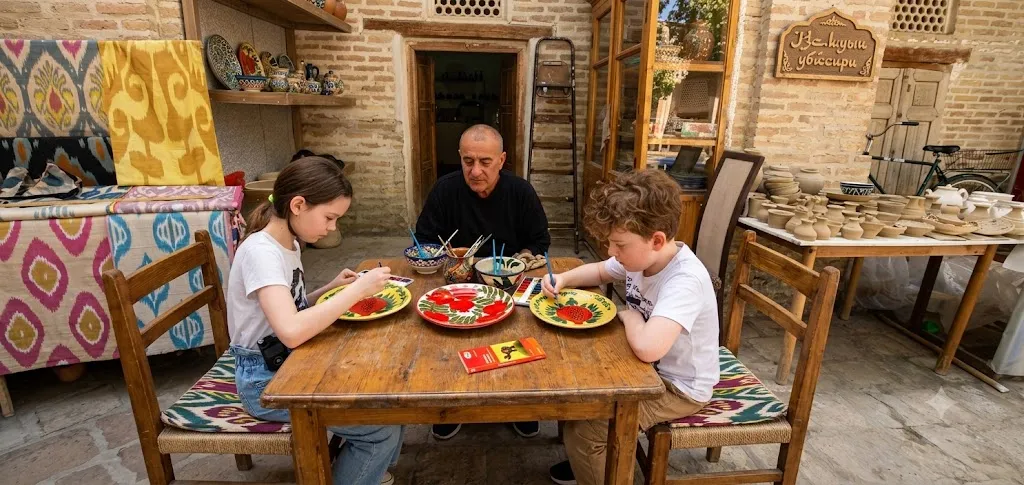
- learning how ceramics or textiles are made;
- bargaining for a small souvenir;
- trying plov or making local food;
- camel rides;
- sleeping in a yurt;
- exploring bazaars.
The trick is still balance.
History in the morning. Something interactive in the afternoon.
Teenagers: Give Them Stories, Freedom and Something Unexpected
Teenagers may be harder to impress with another beautiful building. So do not sell Uzbekistan to them as a series of monuments.
Give them the bigger story. For centuries, these cities connected China, Persia, India, the Middle East and Europe. Traders carried not only silk and spices, but ideas, technologies, religions and languages. Suddenly Samarkand is not simply “an old city.”
It was one of the great crossroads of the world. Teenagers may also connect more strongly with contemporary Uzbekistan:
- street food, photography, fashion, local young people, modern Tashkent and the contrast between ancient neighborhoods and today's cities.
- Craft workshops can work well too, particularly when children get to meet the people behind traditional ceramics, textiles or embroidery rather than simply viewing finished objects in a museum.
- For families interested in this side of the country, Minzifa Travel's Art and Craft Tour connects the major Silk Road cities with Uzbekistan's living craft traditions.
What Works for Almost Every Age?
Some experiences cross age groups surprisingly well.
- Khiva works because it feels different from a normal city.
- Bazaars work because there is always something to smell, taste or see.
- High-speed trains make moving between cities much easier than spending endless hours in a car.
- Food gives everyone something to discuss.
And experiences such as a yurt stay or meeting an artisan create memories without requiring children to understand hundreds of years of history.
Minzifa Travel's own family travel guide recommends turning Uzbekistan's history into something active and sensory rather than relying on museum-style sightseeing.
The Season Matters Even More With Children
Uzbekistan involves a lot of outdoor sightseeing.
For families, spring and autumn are generally the easiest periods because temperatures are more comfortable for exploring Samarkand, Bukhara and Khiva on foot. Minzifa Travel recommends March–June and September–October as the main periods for pleasant weather and sightseeing.
If travelling during hotter months, plan major sightseeing earlier in the day and leave room for a proper midday break.
Children rarely remember how many monuments they managed to visit.
They definitely remember being exhausted.
So, What Is the Best Age to Visit Uzbekistan?
There really is no single perfect age.
- Under 5: keep the trip shorter, visual and relaxed.
- 6–8: turn history into castles, stories, crafts and adventures.
- 9–12: combine Silk Road history with interactive experiences — this may be the easiest overall age.
- Teenagers: go deeper into history, photography, contemporary culture and the bigger Silk Road story.
The most important thing is not your children's age.
It is whether the itinerary was designed with them in mind.
A family trip should not feel like an adult tour where children happen to be present.
Discover Uzbekistan as a Family
For families who want the classic Silk Road at a comfortable pace, explore the private 12-Day Ancient Cities of the Silk Road Tour, currently classified as a relaxed journey.
For more variety and hands-on experiences, see From Urban to Rural Uzbekistan, combining famous cities with artisans, local families and a yurt experience.
Or create your own Uzbekistan trip with Minzifa Travel and tell us your children's ages, interests and travel pace.
Because the best family itinerary is not the one where children see everything — it is the one where they come home wanting to tell someone what they saw.