August 27, 2025 · 1 min read
Arts and Crafts of Uzbekistan: Traditions and Styles
Uzbek arts and crafts grew along the Silk Road, where caravans carried silk, dyes, metal, and ideas. Today the country keeps these skills alive in family workshops and guilds. If you plan to see and buy authentic items, this guide covers the main types, where they come from, what the patterns mean, and how to shop with confidence.
Use this detailed overview to plan your route and market visits. For curated itineraries and artisan stops, check the insider tips from Minzifa Travel.
What counts as "arts and crafts" in Uzbekistan
- Ceramics: tableware and tiles with deep blues and greens.
- Textiles: ikat (atlas/adras), suzani embroidery, carpets and kilims, goldwork.
- Woodcarving: doors, columns, Qur'an stands, boxes.
- Metalwork: knives, chiselled trays, teapots, and engraved brass.
- Jewelry: filigree and granulation in silver and gold, often with coral and turquoise.
- Miniature painting: lacquer boxes and panels inspired by Timurid manuscripts.
- Paper: mulberry paper from Samarkand.
- Musical instruments: dutar, tanbur, doira, nay.
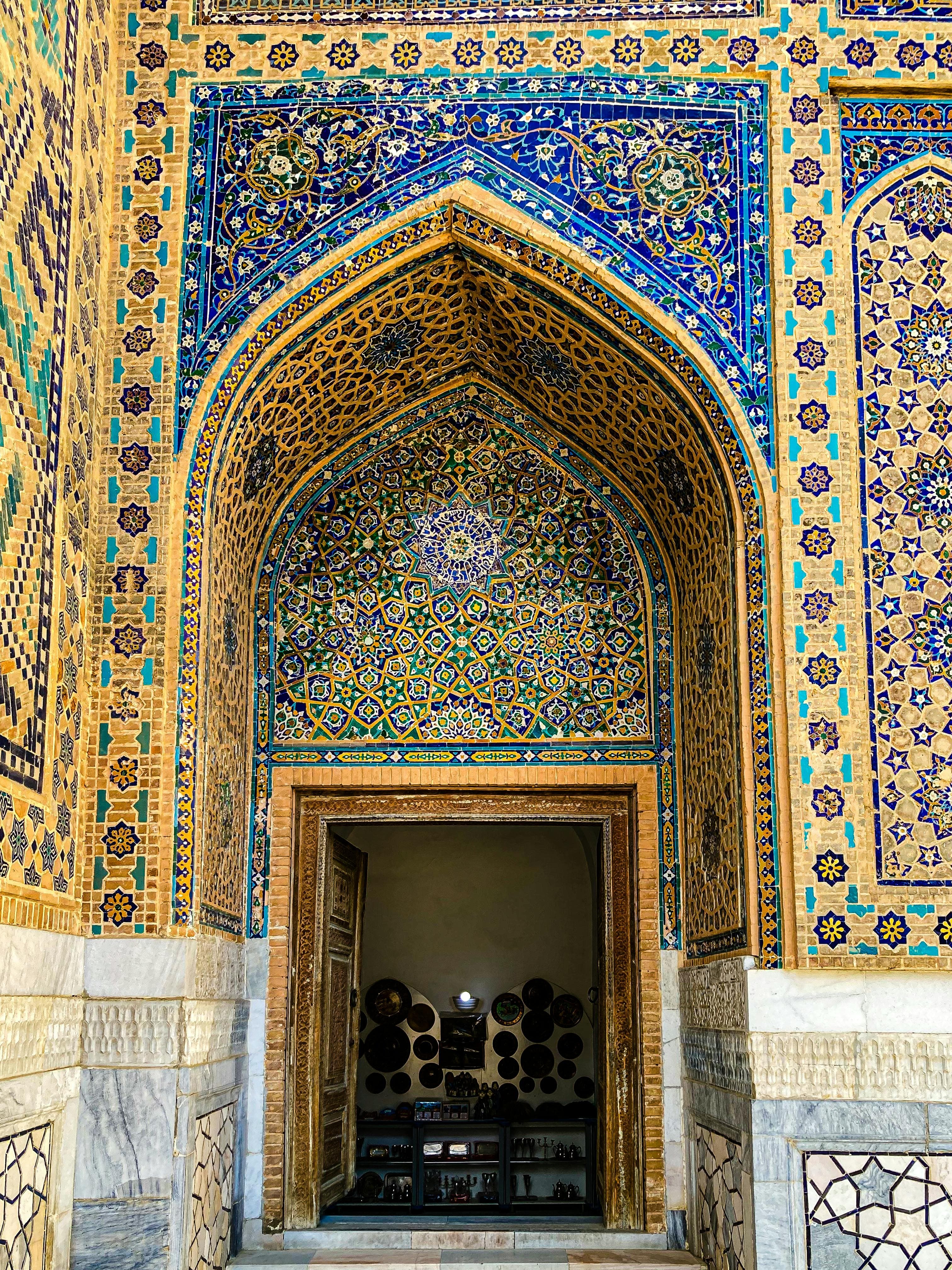
- Ganch and tilework: carved plaster and glazed tiles used in madrasas and mosques.
Signature regions and styles
- Ceramics
- Rishtan (Fergana Valley): famous for natural ishkor glaze (plant ash) with rich turquoise and cobalt. Expect bold floral spirals and arabesques.
- Gijduvan (near Bukhara): earthy ochres and browns, geometric borders, and sturdy forms.
- Khiva and Khorezm: turquoise and white combinations, simple yet striking motifs.
- Textiles
- Ikat (Margilan): atlas (silk) and adras (silk-cotton). Blurry edges are the point—the pattern is dyed into the threads before weaving.
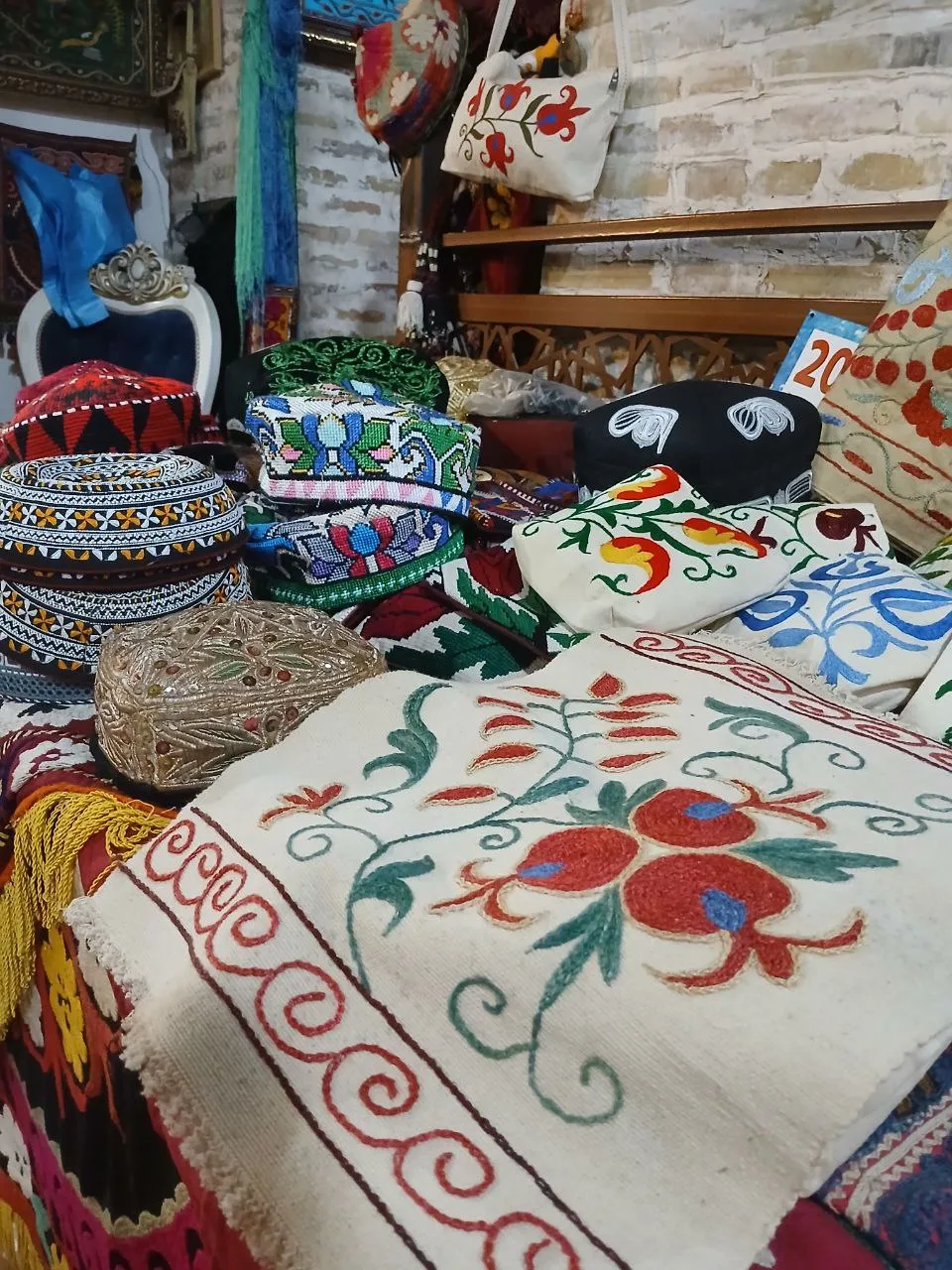
- Suzani (Samarkand, Bukhara, Nurata): large embroideries for dowries and wall decor. Pomegranates, sun disks, vines, and almond (bodom) motifs are common.
- Gold embroidery (zardozi, Bukhara): robes, skullcaps (doppi), and ceremonial textiles with metallic thread.
- Carpets and kilims (Bukhara, Khorezm): red grounds, diamond lattices, and ram's-horn motifs; plus shaggy "julkhirs" rugs.
- Wood and stone
- Bukhara and Khiva: carved doors, columns, and mashrabiya-style screens with floral and star patterns.
- Metal and blades
- Chust (Namangan): handmade knives with horn or wood handles; traditional inlay.
- Bukhara: engraved brass trays and tea sets.
- Paper and miniatures
- Samarkand (Konigil): mulberry paper with a soft, fibrous texture used for calligraphy and miniature painting.
For routes that connect these towns and workshops, browse this practical article by Minzifa Travel.
Motifs and what they mean
- Pomegranate: life, prosperity, and abundance.
- Almond (bodom): protection and femininity.
- Ram's horn: strength and good fortune.
- Islimi vines: endless growth and harmony.
- Eight-pointed star: balance and cosmic order. Colors often come from natural dyes: indigo (blue), madder (red), walnut and pomegranate rind (browns/yellows). In Rishtan pottery, the glassy surface comes from the plant-ash ishkor glaze.
How to spot authentic work
- Ceramics: small irregularities and tiny pinholes in the glaze are fine; hand-painted lines vary slightly. Perfectly identical plates suggest factory work.
- Ikat: patterns should not align too perfectly at the edges; the design sits in the yarn, not printed on the surface.
- Suzani: you'll see knots and slight tension changes on the back; older or hand-dyed pieces show color variation.
- Carpets: check the back—hand-knotted rugs show individual knots; machine-made backs look uniform.
- Metalwork: hand-chased lines have tiny starts and stops; etched pieces feel flat and even. Always ask who made it, how long it took, and what materials were used. Good sellers will answer clearly.
Where to see and buy
- Tashkent: State Museum of Applied Arts; Chorsu Bazaar for a first look.
- Samarkand: Siab Bazaar; Konigil Paper Mill for demonstrations.
- Bukhara: Toqi Zargaron (jewelers' dome), Tim Abdullakhan, and blacksmiths' workshops in the old madrasas.
- Khiva: Ichan Kala's craft streets for woodcarving, ceramics, and embroidery.
- Fergana Valley: Margilan's silk workshops (Yodgorlik), Rishtan's potters. Tip: Visit in the morning when workshops are active. Join a short masterclass if offered.
Buying tips and customs rules
- Bargain politely; start 15–25% below the first price and meet in the middle.
- Pay in cash when possible; carry small bills.
- Check export rules: antiques (typically older than 50 years) need permits. Keep receipts for newer items.
- Pack ceramics and glass in clothing; ask sellers for extra padding.
Care and display
- Textiles: keep out of direct sun; vacuum through a mesh or gently shake. Dry clean only if needed.
- Ceramics: hand-wash; avoid sudden temperature changes.
- Metal: dust with a soft cloth; avoid harsh polishes that remove patina.
- Wood: wipe with a dry cloth; keep away from very dry air to prevent cracks.
Quick FAQ
- What's the difference between suzani and ikat? Suzani is embroidery stitched after weaving; ikat is a woven fabric with pre-dyed patterned threads.
- Best cities for crafts? Bukhara and Khiva for wood and metal, Samarkand for suzani and paper, Margilan for silk, Rishtan for ceramics.
- Can I ship items home? Many shops arrange DHL/EMS. Photograph your receipt and the seller's details.
If you want a route that strings together master workshops and the most authentic markets, use the local expertise from Minzifa Travel. Their craft-focused suggestions help you meet artisans, not just shops.