November 24, 2025 · 1 min read
Exploring Modernist Architecture in Tashkent: Soviet Gems and Futuristic Designs
For decades, Tashkent was the hidden laboratory of the Soviet Union. After a devastating earthquake in 1966 leveled much of the city, architects from across the USSR descended on the capital with a blank check and a bold vision.
The result? A city that feels like a sci-fi movie set.
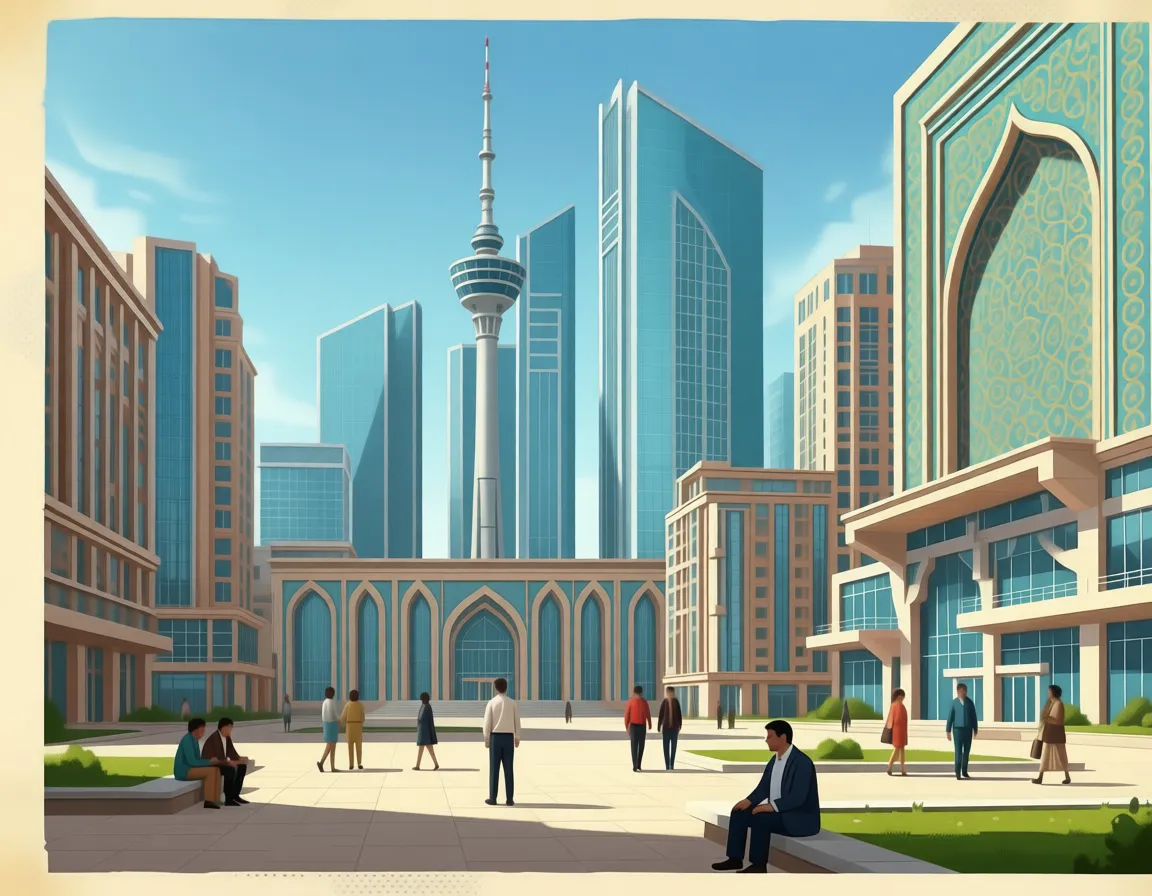
In 2026, Tashkent is experiencing a renaissance. The "Concrete Giants" of the 20th century now stand shoulder-to-shoulder with glittering glass skyscrapers. For the design-savvy traveler, there is no more exciting city in Central Asia.
Here is your guide to the architectural time-warp of Tashkent—and how to see it all with Minzifa Travel.
Part 1: The Soviet Giants (Brutalism & Orientalism)
Tashkent's unique style is often called "Soviet Orientalism." It blends the massive concrete structures of Brutalism with intricate traditional patterns (panjara) to protect against the hot sun.
1. Hotel Uzbekistan
The Icon. Looming over Amir Timur Square, this building is the face of the city. Its curved facade is completely covered in a concrete lattice that mimics traditional wood carving.
- The Vibe: Wes Anderson meets Soviet spy novel.
- Why Visit: It is a masterclass in functional design—the "curtain" provides shade for the rooms while creating a stunning visual texture.
2. The State Museum of History
The Floating Cube. Formerly the Lenin Museum, this is perhaps the finest example of Tashkent Modernism. It is a perfect concrete cube that appears to float above the ground.
The Detail: Look closely at the facade. It isn’t just plain concrete; it’s a geometric panjara screen that wraps the entire building, filtering light into the galleries.
- Chorsu Bazaar
The Blue Dome. Forget the open-air markets you are used to. Chorsu is a colossal concrete UFO topped with a massive turquoise dome covered in glazed tiles.
The Experience: Step inside the main dome. The acoustics are incredible—the hum of hundreds of merchants selling spices and dried fruits echoes off the vast concrete ceiling.
- The Tashkent Metro
The Underground Palaces. In the USSR, metros were built as "palaces for the people." Tashkent’s system is an underground art gallery.
Must-See Station: Kosmonavtlar (Cosmonauts). Dedicated to the Soviet space program, it features dreamlike portraits of Yuri Gagarin and floating ceramic pillars that fade from blue to black to mimic the Earth's atmosphere.
Part 2: The Sci-Fi Bonus
- The Institute of the Sun (Solar Furnace)
The Alien Artifact. Located just 45km outside Tashkent in the Parkent hills, this is one of the most surreal structures on Earth. It is a massive solar concentrator built in the 1980s to test materials for use in outer space.
- The Visual: A gigantic curved mirror (54 meters high!) facing a field of 62 smaller mirrors. It looks like a Death Star laser beam.
- Access: It is a working scientific facility. You cannot just show up; you need prior clearance and a guide. Minzifa Travel arranges exclusive tours here, including access to the observation deck at the top of the mirror.
Part 3: The Future is Now
Tashkent isn't stuck in the past. The skyline is changing faster than ever.
6. Tashkent City International Business Center
The New Heart. This massive urban project is the symbol of the "New Uzbekistan."
- Nest One: The tallest skyscraper in Central Asia (266 meters). It features a viewing deck that offers a panoramic contrast: look down to see the Soviet blocks, look up to see the mountains.
- The Musical Fountain: In the center of the park, a massive fountain puts on a synchronized light and music show every evening that rivals the Bellagio in Vegas.
7. Center for Contemporary Arts (CCA)
The Hipster Conversion. Housed in a 1912 diesel power station and former tram depot, this space has been reimagined by French studio Studio KO. It preserves the industrial brickwork while filling the space with cutting-edge art installations. It is the coolest spot in town for a coffee and culture fix.
See the Layers of History with Minzifa Travel
Architecture tells a story, but you need someone to translate it. A solo traveler sees a concrete block; a Minzifa Travel guest sees a story of resilience, earthquake survival, and artistic rebellion.
Our "Architectural Tashkent" Package Includes:
- Specialist Guides: Historians who specialize in Soviet Modernism.
- Private Access: Permits for the Institute of the Sun and rooftop views.
- Metro Tours: We know the best time to visit the stations to get photos without the crowds.
- Comfort: Private drivers to whisk you between the scattered sites in air-conditioned comfort. Don't just look at the buildings. Read the city.
👉 Book Your Architectural Discovery Tour at Minzifatravel.com