August 27, 2025 · 1 min read
Most Popular Art in Uzbekistan: What to See
Short answer
The most popular type of art in Uzbekistan is suzani embroidery — a living tradition of hand‑stitched cotton or silk textiles decorated with sun medallions, pomegranates, vines, and protective motifs. It is everywhere: in homes, at weddings, in markets, and in museums. If you see one craft that defines the country for travelers and locals alike, it's suzani.
For a broader look at crafts and styles, see this helpful guide: Arts and Crafts of Uzbekistan: Traditions and Styles.
Why suzani leads
- It's a daily craft, not just museum art. Families still embroider dowry textiles.
- Design is unmistakable: bold roundels, red and gold accents, flowing vines.
- It travels well and is affordable in many sizes, from cushion covers to large panels.
- Regional schools add character (Bukhara, Samarkand, Nurata), so collectors can explore styles.
What suzani is made of
- Base: cotton (everyday) or silk (premium)
- Thread: silk or cotton, naturally or synthetically dyed
- Stitches: chain, couching, buttonhole — clean backs and even tension signal quality
Where to see and buy
- Tashkent: Chorsu Bazaar, applied arts shops, the State Museum of Applied Arts
- Samarkand: Siab Bazaar, workshops near Registan
- Bukhara: trading domes (Toqi Sarrafon), artisan courtyards
- Khiva: old town ateliers
- Margilan: combine with ikat weaving studios
Tip: Ask the seller who stitched the piece, where, and when. New works are fine; antiques may require an export permit.
Price and quality checklist
- Look at the back: tidy backs and consistent spacing usually mean better work.
- Dyes: natural tones look deep and slightly varied; synthetics are brighter and even.
- Age: "vintage" (20–50 years) is common; true antiques are rarer and regulated.
- Edges: finished hems and strong backing help textiles last.
- Fair pay: bargaining is normal, but keep it respectful.
Care
- Keep out of direct sun to prevent fading.
- Light vacuum through a mesh; avoid machine washing.
- Dry clean with a specialist familiar with silk and natural dyes.
Close contenders
While suzani is number one for many visitors, Uzbekistan's applied arts are rich and varied:
- Ceramics (Rishton, Gijduvan): famous for turquoise‑green glazes and strong forms.
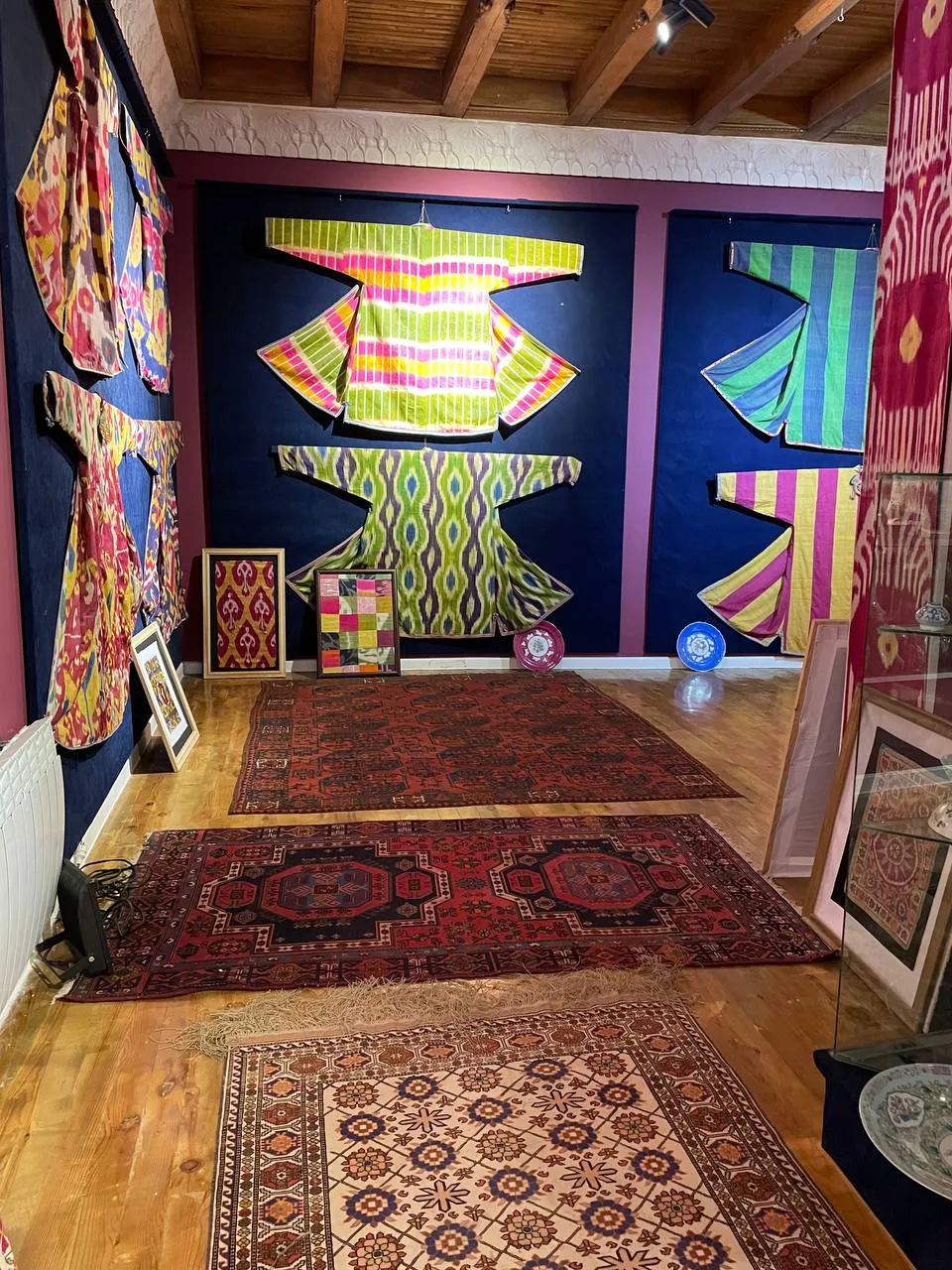
- Ikat (atlas, adras): resist‑dyed silk or silk‑cotton with striking blurred patterns.
- Woodcarving (Bukhara, Khiva): doors, columns, and boxes with deep floral reliefs.
- Metalwork (Bukhara): chased brass, inlay, and engraved teapots or trays.
- Miniature painting: fine brushwork on paper or lacquer, telling epic and daily‑life scenes.
Explore more examples and routes here: Uzbek arts and crafts: traditions and styles.
Best places to learn
- Museums of Applied Arts (Tashkent, Bukhara): quick overview of techniques and regions.
- Artisan workshops: short demos; some offer hands‑on classes.
- Festivals: spring and autumn craft fairs bring masters together.
Suggested craft day route
1) Morning at a museum to understand motifs. 2) Workshop visit for suzani or ceramics demo. 3) Market walk to compare quality and prices. 4) Evening review: choose one standout piece rather than many average ones.
FAQ
- Is suzani the same as a carpet? No. Suzani is embroidered textile; carpets are knotted or woven.
- Can I export antiques? Works older than 50 years may need a permit. Ask the seller and check current rules.
- When to shop? Year‑round. Spring and autumn have more fairs and comfortable weather.
Bottom line
If you want one craft that captures Uzbekistan, pick a suzani. It's beautiful, practical, and full of meaning — and it will remind you of the country every time you see it. For deeper background and itineraries around crafts, start with this overview: Arts and Crafts of Uzbekistan: Traditions and Styles.