November 24, 2025 · 1 min read
Navigating Uzbekistan’s Bazaars: Where to Shop & What to Buy
Forget souvenir shops and duty-free outlets. The true commerce, culture, and cuisine of Uzbekistan intersect in one place: the bazaar.
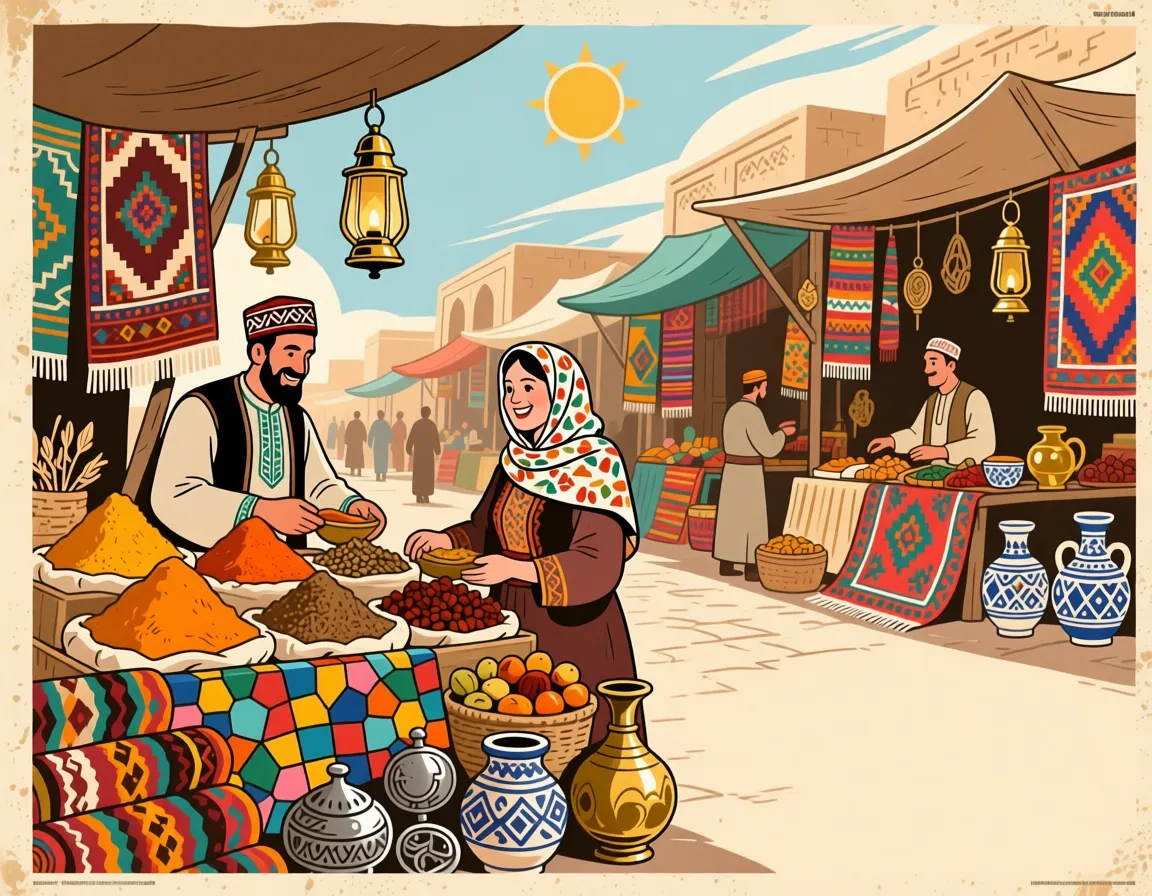
More than just markets, bazaars are living, breathing monuments along the Silk Road—noisy, fragrant, and bursting with color. To step into a bazaar is to engage in a ritual that has remained unchanged for a thousand years.
Here is your local’s guide to navigating the best markets, mastering the art of the bargain, and bringing home treasures that tell a genuine story.
Part 1: The Three Essential Bazaars
Each major city has its own flavor of market, catering to different shopping goals.
1. Chorsu Bazaar (Tashkent)
- The Vibe: The grandest and most iconic market, recognizable by its huge, blue-tiled dome. This is a classic Soviet-era landmark that is still 100% authentic.
- What to Buy Here: Spices, dried fruits, and food. The dried apricots, crystallized sugar (Navat), and stacks of aromatic spices are spectacular. This is where locals buy their Plov ingredients.
- Minzifa Tip: Visit the surrounding open-air sections for traditional clothes and hats (Doppi) that are priced lower than in the tourist centers.
2. Siab Bazaar (Samarkand)
- The Atmosphere: Perfectly situated next to the Bibi-Khanym Mosque, Siab is famed for its huge mounds of colorful produce and its specialities.
- What to Buy Here: The famous Samarkand Bread (Non). This unique, dense, sweet flatbread is baked to last and is a required souvenir. Also look for Halva (a rich, sweet confection) and Samarkand Paper goods (made from the ancient mulberry bark method).
3. The Trading Domes (Bukhara)
- The History: Bukhara’s markets are unique because they are housed under historic Toki (trading domes) that date back to the 16th century. These are no longer "produce markets" but dedicated artisan hubs.
- What to Buy Here: Textiles and Jewelry. The Toki Telpak Furushon (hat sellers) and Toki Zargaron (jewelers) are the best places to find quality silver jewelry, silk scarves, and the gorgeous, vibrant Suzani embroidery.
Part 2: Mastering the Art of the Bazaar (The Bargain)
For US and UK travelers, bargaining can feel awkward, but in Uzbekistan, it is a social ritual.
- Start Low, Be Kind: The initial price is often inflated by 30-50% for tourists. Offer about half of the asking price and negotiate up from there. Rule: Never negotiate for basic food items (like bread or vegetables) as the price is fixed, only for crafts and souvenirs.
- Cash is King (Small Bills): The vast majority of vendors, particularly in the food sections, only accept cash (Uzbek Sums - UZS). Have small bills ready to avoid change issues.
- Taste Test is Expected: Vendors are proud of their produce. If you are buying dried fruit, nuts, or spices, make eye contact and simply point or gesture to ask for a sample (ta'tib ko'rsam bo'ladimi?).
- Buy in Multiples: If you plan to buy several items (e.g., three scarves, five plates), mention this during the negotiation; the seller will be more inclined to offer a bulk discount.
- Look for the Workshop: The highest quality (and often the best price, despite the higher price tag) is found when you buy directly from the master who made it, usually at a workshop outside the main bazaar.
Go Beyond the Crowd with Minzifa Travel
A guided tour of a bazaar is far more than just a shopping trip. Our expert guides do the heavy lifting:
- Authentication: We take you directly to trusted artisans, ensuring the silk is real and the ceramics are handmade (not mass-produced).
- Translation & Haggling: Our guides help bridge the language barrier, giving you the confidence to negotiate successfully and fostering genuine, friendly interaction.
- Specialty Visits: We can arrange excursions to the ceramics centers of Gijduvan or the silk weavers of Margilan, where the quality is unmatched.
Stop scrolling. Start shopping. Your Silk Road treasures are waiting.
👉 Book Your Curated Silk Road Shopping Tour at Minzifatravel.com