February 24, 2026 · 1 min read
The Language of Patterns: Suzani and the Art of Silk
To look at an Uzbek textile is to read a letter from the past. In twenty twenty-six, the vibrant silks and intricate embroideries of Uzbekistan are no longer just museum pieces; they are the high-fashion language of a nation. Whether it is a hand-stitched Suzani or a shimmering piece of Ikat, every thread carries a code of protection, prosperity, and identity.
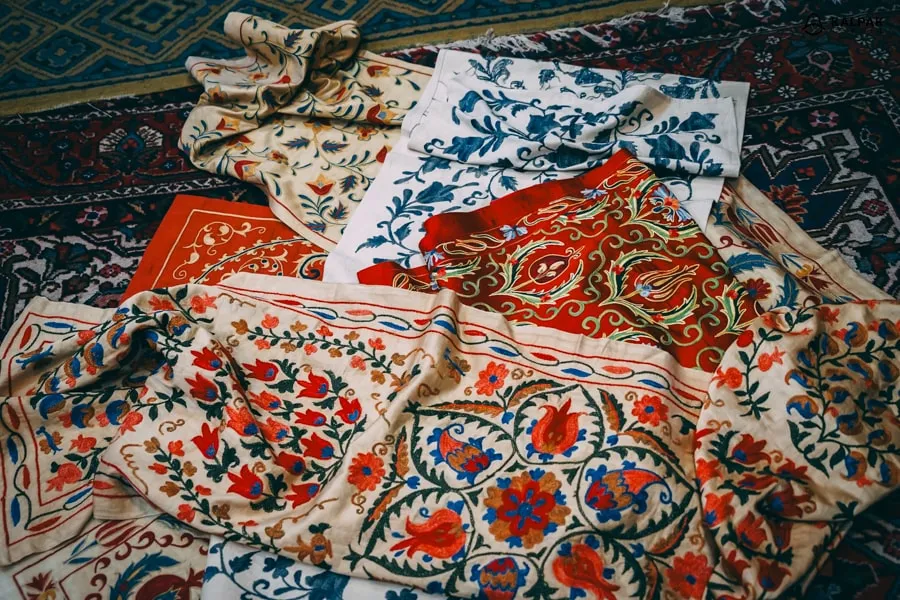
Suzani: Decoding the Secret Symbols
The word Suzani comes from the Persian suzan, meaning "needle." Traditionally created by brides as part of their dowry, these large embroidered panels are "painted" with silk thread. In twenty twenty-six, we continue to decode the messages hidden in their stitches:
- The Pomegranate (Anor): The ultimate symbol of fertility and abundance. A suzani with pomegranates was a wish for a large, healthy family.
- The Sun and Moon: These circular motifs represent the cosmic order and the protection of the heavens over the home.
- The Almond (Bodom): Often shaped like a teardrop or a flame, the almond is a powerful amulet against the "evil eye."
- The Pepper (Kalampir): A symbol of protection. It was believed that the "heat" of the pepper would ward off malevolent spirits.
The Art of Silk: Cloud-Tying (Ikat)
If Suzani is the language of the needle, Ikat (known locally as Abrbandchilik or "cloud-tying") is the language of the loom.
- The Process: It begins with the boiling of silkworm cocoons to extract the "golden thread." The magic happens during the dyeing process, where the threads are bound and dyed before they are woven. This creates the signature "blurred" edges of the patterns—as if the colors are melting into one another like clouds.
- Atlas vs. Adras: In your travels, you will encounter two main types. Atlas is pure, shimmering silk, traditionally reserved for royalty. Adras is a sophisticated blend of silk and cotton, prized in twenty twenty-six for its durability and breathable comfort in the desert heat.
Regional Dialects of Style
Just as accents change from city to city, so do the patterns:
- Bukhara: Known for its delicate chain stitches and floral "gardens" that seem to grow across the fabric.
- Tashkent (Palak): Famous for its "Sky Suzanis," featuring massive, bold dark red circles that represent the sun and stars.
- Nurata: Highly recognizable for its naturalistic depictions of flowers, birds, and even the occasional stylized animal.
Weave Your Own Story with Minzifa Travel At Minzifa Travel, we don't just take you to gift shops. We take you to the workshops where these traditions are being reinvented for the twenty twenty-sixth century.
- The Margilan Silk Trail: We take you to the UNESCO-recognized Craft Development Center in Margilan, where you can see the entire "cocoon-to-couture" process.
- Masterclasses with the Greats: Want to learn the "Bukhara Stitch"? We arrange private sessions with award-winning masters who will teach you how to hold the needle and read the patterns.
- Authentic Sourcing: If you are a collector, our guides help you distinguish between machine-made replicas and genuine hand-embroidered masterpieces, ensuring you bring home a true piece of Uzbek heritage.
The Silk Road is not a road of stone; it is a road of thread. Are you ready to follow it?
👉 Discover the textile treasures of Uzbekistan with Minzifa Travel