January 22, 2026 · 1 min read
The Spirit of the Tandyr: Sacred Bread and Clay-Oven Secrets
In Uzbekistan, bread is not just a side dish; it is the most sacred element of the table. You can have a feast of a dozen courses, but without bread, the table is considered empty. In twenty twenty-six, the ancient tradition of the Tandyr (the clay oven) remains the heartbeat of every neighborhood, filling the morning air with the intoxicating scent of toasted flour and sesame.
To understand the Uzbek spirit, you must first break a piece of warm, golden Non.
The Tandyr: The Womb of the Earth
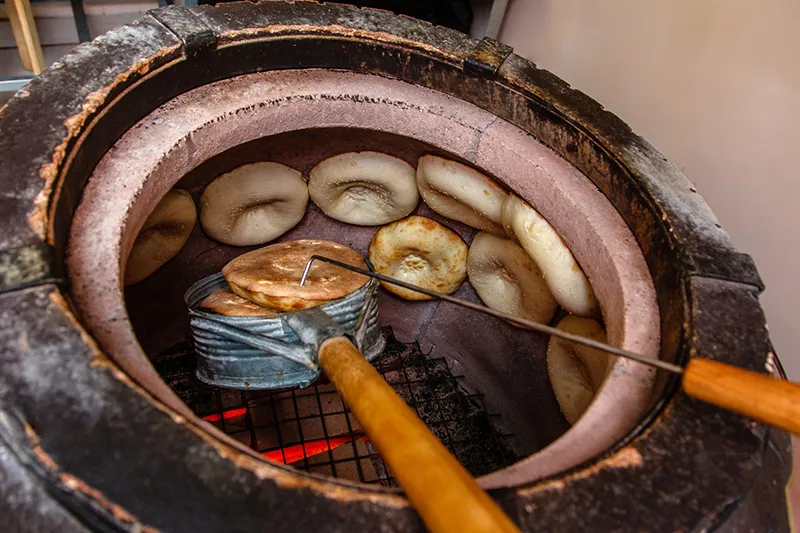
The Tandyr is a vertical or horizontal clay oven that looks like a large beehive. It is a masterpiece of ancient engineering, made from local clay mixed with camel or sheep hair to ensure it can withstand intense heat.
- The Slap and the Stick: Watching a baker (nonvoy) at work is like watching a rhythmic dance. They lean deep into the searing heat of the oven to "slap" the dough against the white-hot clay walls. It stays there, defying gravity, as it bakes to a perfect golden brown.
- The Chekich: Each loaf is stamped in the center with a chekich—a wooden tool with a pattern of needles. This isn't just for decoration; it prevents the center from rising too much and creates a beautiful, signature design that identifies the bakery.
Sacred Customs: More Than Just Food
In Uzbek culture, bread is treated with a level of respect that borders on the religious. There are several "unwritten laws" that every visitor should know:
- Never Face Down: Bread should never be placed "face down" (the patterned side must always face up). To do otherwise is considered a sign of disrespect to the food and the host.
- The Hands, Not the Knife: Tradition dictates that bread should never be cut with a knife. Instead, it is broken by hand into pieces—a gesture that symbolizes sharing and community.
- A Symbol of Safety: When a family member leaves for a long journey, they traditionally take a bite of a loaf of bread, which is then kept in a safe place until they return. It is believed to ensure a safe journey home.
Regional Legends: Samarkand vs. the World
Every region has its own signature loaf, but the rivalry between cities is legendary.
- Samarkand Non: Famous for being heavy, dense, and incredibly long-lasting. Legend says that the air of Samarkand is the secret ingredient. It is so hearty that it can stay fresh for weeks, and travelers often take dozens of Samarkand loaves home as the ultimate souvenir.
- Tashkent Non: Known as Obi-non, it is lighter, fluffier, and perfect for soaking up the juices of a fresh salad or a bowl of shurpa.
- Kokand Patir: A rich, flaky bread made with extra cream or butter, turning the humble loaf into a decadent pastry-like treat.
Taste the Tradition with Minzifa Travel The best bread isn't found in a supermarket; it’s found in a smoke-filled alleyway at sunrise. Minzifa Travel takes you to the source of the flame.
- Early Morning Bakery Tours: We lead you to the most authentic neighborhood bakeries in the heart of the old mahallas, where you can watch the first batch of the day emerge from the Tandyr.
- Become the Baker: We arrange hands-on workshops where you can try your hand at shaping the dough and using the chekich stamp under the watchful eye of a master nonvoy.
- The Perfect Pairing: Our culinary guides know exactly which market stalls serve the best fresh cream (kaymak) to pair with your steaming hot bread for the ultimate Uzbek breakfast.
There is no sound quite like the "crunch" of a fresh crust. Are you ready for your first bite?
👉 Join a Minzifa Travel food tour and discover the secrets of the Tandyr