December 6, 2025 · 1 min read
The Untold Story of the Aral Sea: Nature, Loss and Regeneration
The Aral Sea is often cited as one of the world's greatest man-made environmental disasters. While the tragedy of its loss is undeniable, the story today is shifting towards an extraordinary, human-led effort of regeneration, resilience, and hope.
For the responsible traveler, a journey to the former shoreline is the most profound and necessary trip in Uzbekistan. It is a commitment to witness history, understand ecological loss, and directly support the communities fighting for their future.
1. The Tragedy of Loss: Muynak’s Testimony
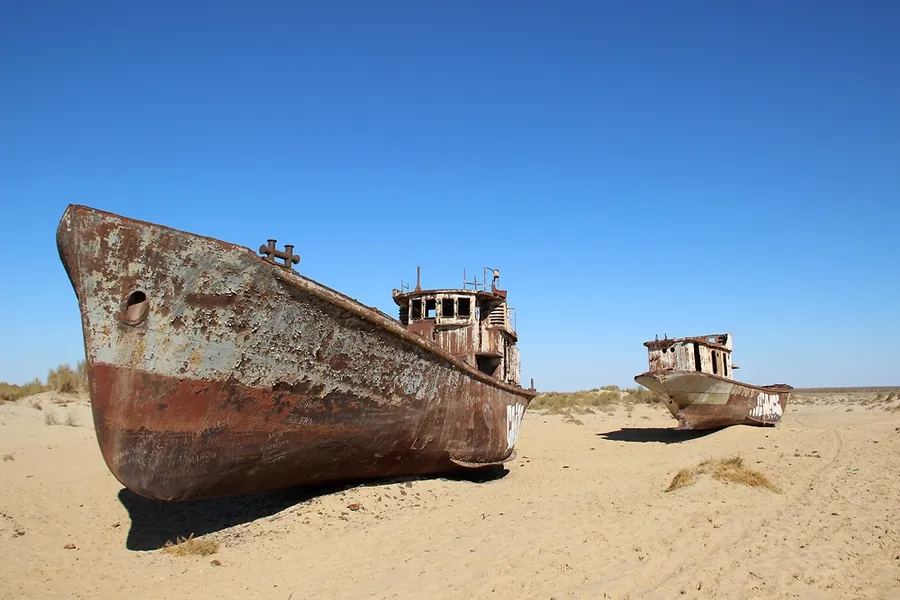
The scale of the disaster is best understood in Muynak (Moʻynoq), once a bustling port and Uzbekistan’s largest fishing hub.
- The Ship Graveyard: The most somber sight is the Ship Graveyard, where dozens of rusted fishing trawlers lie beached in what is now the vast, arid Aralkum Desert—over 150 km from the current shoreline. These hulks stand as stark monuments to a vanished ecosystem.
- Ecological Impact: The diversion of the Amu Darya and Syr Darya rivers for irrigation caused the sea to shrink by 90%. This left behind a dry seabed contaminated with salt and residual pesticides, which are whipped up by dust storms, leading to severe health problems for the local population in the autonomous Karakalpakstan region.
2. The New Nature: Greening the Aralkum
The most vital chapter in the Aral Sea story is the massive ecological counter-attack launched by the Uzbek government and international partners.
- The Saxaul Forest: The dried seabed is now the site of one of the world's most ambitious afforestation projects. Experts are planting millions of Saxaul (Haloxylon) shrubs—a hardy, native plant with deep roots known for its ability to thrive in saline soil.
- Stabilizing the Desert: The goal is to stabilize the moving sands and lock down the toxic dust, effectively creating a "green barrier." These efforts are vital not only for local air quality but also to prevent dust storms from affecting neighboring countries.
- Innovation: International projects (like those supported by UNDP and USAID) are using innovative methods, including satellite monitoring and experimental moisture-retaining technologies, to maximize the survival rate of these seedlings in the harsh environment.
3. Regeneration and Livelihoods: A New Beginning
Today, the most impactful reason to visit is to support the local economy as it pivots from fishing to climate-smart agriculture, eco-tourism, and community development.
- Local Resilience: Communities in Muynak and surrounding towns are adapting, focusing on business models resilient to climate change. Tourism provides desperately needed jobs and income, helping to curb the trend of population decline.
- A Zone of Innovation: The Uzbek government has designated the Aral Sea region a "Zone of Environmental Innovations and Technologies," fostering international cooperation and investment in sustainable solutions.
- Ethical Tourism: By choosing to visit the region, you participate in ethical disaster tourism, ensuring that your spending supports the people who are dedicating their lives to adapting and healing the environment.
Witness the Ecological Frontline with Minzifa Travel
Visiting Muynak and the Aral Sea region is logistically complex. The journey is long and requires specialized transport and reliable infrastructure in a remote area.
Minzifa Travel ensures your trip is ethical, safe, and impactful:
- Vetted 4x4 Transport: We organize the necessary long-distance travel from Khiva or Nukus via reliable, maintained 4x4 vehicles and experienced drivers who know the Ustyurt Plateau terrain.
- Community-Focused Stays: We utilize local guesthouses and vetted accommodations in Muynak and the surrounding area, ensuring your travel money directly benefits the communities involved in regeneration.
- Guided Context: Our expert guides provide the deep historical, scientific, and political context of the disaster and the ongoing afforestation efforts, transforming the site from a simple "graveyard" into a powerful lesson in global ecology.
The journey to the Aral Sea is not just a detour—it is a pilgrimage of conscience.
👉 Book your ethical Aral Sea and Karakalpakstan Tour with Minzifa Travel