November 6, 2025 · 1 min read
Traditional Food of Central Asia: Taste the Silk Road Heritage
Central Asia is a land where hospitality meets history through food.
Stretching across Uzbekistan, Kazakhstan, Kyrgyzstan, Tajikistan, and Turkmenistan, the region’s cuisine reflects centuries of nomadic traditions, trade routes, and cultural exchange. Each dish tells a story — of families, caravans, and the enduring warmth of shared meals.
A Journey Through the Flavors of the Silk Road
The Silk Road was not only a trade route for goods but also a culinary highway. Spices from India, rice from Persia, and lamb from the steppes blended to create unique dishes that define Central Asian cuisine today. Meals are hearty, rich in flavor, and designed to nourish both body and soul — a reflection of life on the road and the values of hospitality.
Famous Traditional Dishes of Central Asia
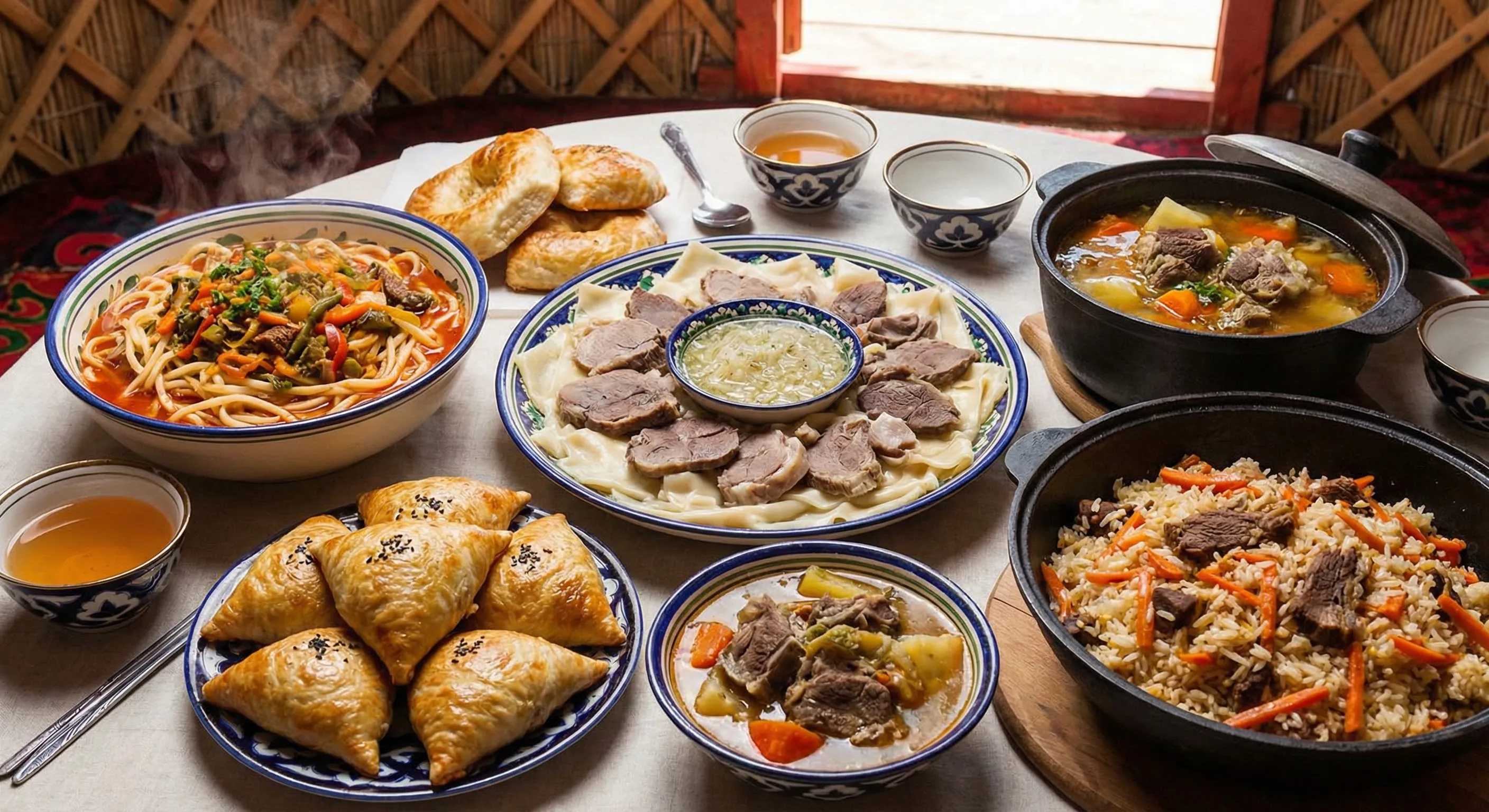
Uzbek Plov — The King of Central Asian Dishes Plov (also known as pilaf) is the signature dish of Uzbekistan. Made with rice, lamb or beef, carrots, and onions, it’s cooked slowly in a large cast-iron cauldron called a kazan. Plov is not just food — it’s tradition. It’s served during weddings, holidays, and family celebrations, symbolizing abundance and unity.
Kyrgyz Beshbarmak — The Feast of Nomads
The national dish of Kyrgyzstan, beshbarmak literally means “five fingers” because it’s traditionally eaten by hand. It consists of boiled meat, usually lamb or horse meat, served over flat noodles with onion broth. Simple, nourishing, and communal — beshbarmak embodies the nomadic spirit of Central Asia.
Kazakh Shashlik — The Art of Grilled Perfection
Shashlik, or grilled skewered meat, is a beloved dish across the region. Marinated in onions and spices, then grilled over open coals, it’s a centerpiece of outdoor feasts and friendly gatherings. The smoky aroma of shashlik defines summer evenings in Kazakhstan and beyond.
Tajik Sambusa & Turkmen Chorek — The Taste of the Oven
In Tajikistan, baked pastries called sambusa are filled with minced meat, onions, or pumpkin. In Turkmenistan, locals enjoy chorek — crispy round bread baked in clay ovens. Both dishes represent warmth and hospitality — simple, homemade, and always served fresh.
The Cultural Meaning of Food in Central Asia
Food in Central Asia is more than nourishment — it’s a social ritual and a sign of respect. Guests are welcomed with tea, bread, and sweets before the main meal. Sharing food is sacred, symbolizing community and trust — values that trace back to ancient nomadic life.
Where to Experience Authentic Central Asian Cuisine
To truly understand Central Asian food, you must taste it where it was born. Walk through the bazaars of Samarkand, dine in yurts on the steppes of Kyrgyzstan, and enjoy a family meal in Bukhara.
For those who want a deeper experience, travel with Minzifa Travel Their cultural tours include cooking classes, traditional home visits, and meals prepared by local chefs.
Conclusion
Central Asian cuisine reflects the soul of the Silk Road — simple yet rich, ancient yet alive. From the fragrant steam of plov to the crunch of freshly baked bread, every bite carries centuries of history and warmth. To taste these dishes is to connect with a culture where food means friendship, and every meal tells a story.