October 7, 2025 · 1 min read
Who Are Nomads in Central Asia Today?
Short answer
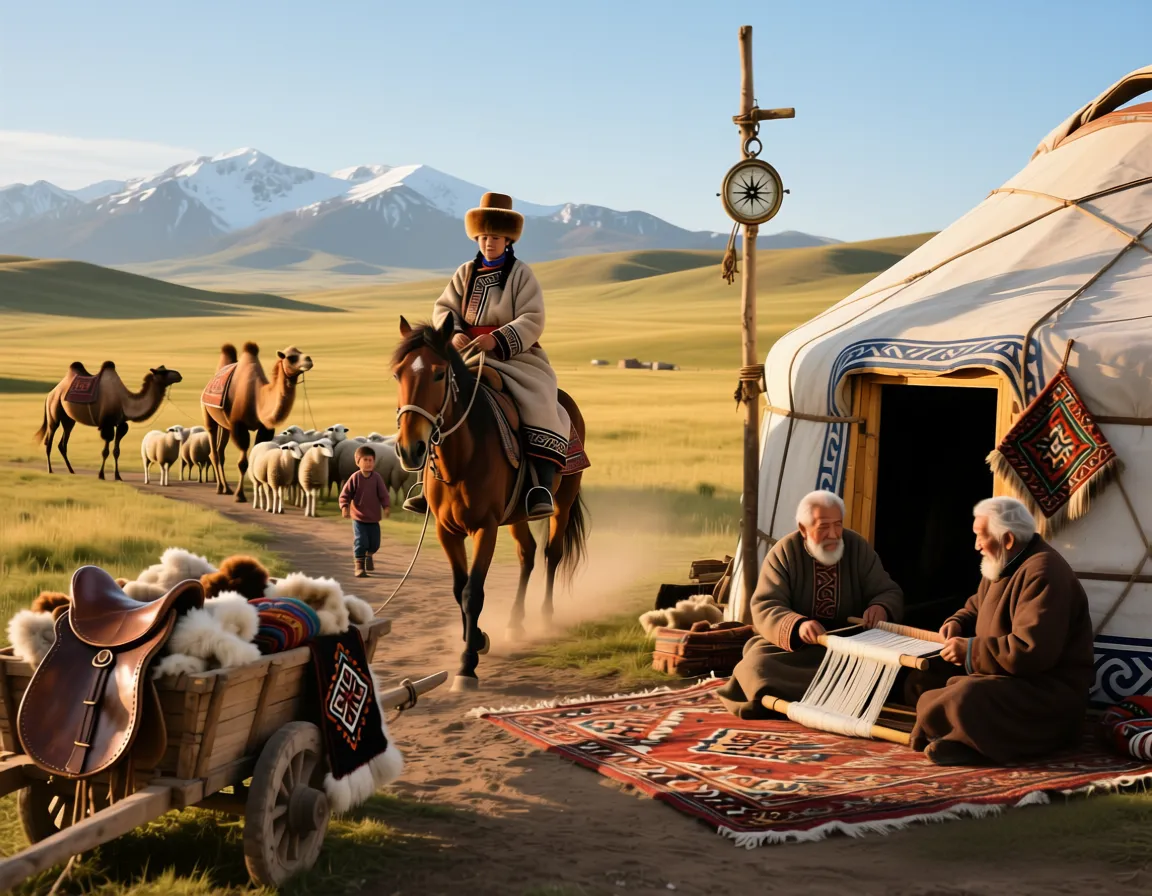
Nomads in Central Asia are pastoral peoples who move seasonally between pastures across the steppe, desert, and mountain zones of Kazakhstan, Kyrgyzstan, Turkmenistan, Uzbekistan, and Tajikistan. They herd sheep, goats, horses, and camels, live in portable felt yurts, and keep social ties through clans and kin networks. Their way of life has shifted over time—from full mobility to mostly semi‑nomadic and transhumant patterns—but the culture, skills, and hospitality remain strong.
For background, maps, and trip ideas, see this practical overview: Nomadic peoples of Central Asia: history and today.
What makes someone a nomad?
- Pastoral mobility: moving herds between seasonal pastures (wintering in lowlands, summering in high meadows).
- Portable homes: yurts (Kazakh: kiiz ui, Kyrgyz: boz üi, Turkmen: ak öý) that can be packed and raised quickly.
- Flexible economy: herding, horse culture, felt‑making, and trade along old Silk Road routes.
- Community ties: clan structures, councils of elders, and deep codes of hospitality.
Peoples and landscapes
- Kazakhs: steppe herders, renowned horse culture and eagle hunting in the east; large yurt traditions and dishes like beshbarmak and fermented mare's milk (kumis).
- Kyrgyz: high‑pasture (jailoo) life around ranges like the Tien Shan; yurt camps near Song‑Kul and Naryn are active in summer.
- Turkmen: desert pastoralism around Karakum; famed Akhal‑Teke horses and rich carpet designs.
- Uzbeks and Tajiks: largely oasis and mountain farmers, yet many communities practice or remember seasonal herding and transhumance (e.g., Pamir and Nuratau areas).
- Karakalpaks (NW Uzbekistan): historically mixed livelihoods around the Aral region.
Culture you can still experience
- Yurts and felt: lattice walls, felt insulation, and patterned textiles (shyrdak, ala‑kiyiz).
- Horses and skills: riding, herding, and mounted games like kokpar/kupkari.
- Food and drink: kumis, kurut (dried cheese), hearty stews, and tea hospitality.
- Music and storytelling: dombra and komuz instruments, epic narratives passed across generations.
A timeline in brief
- Early steppe empires: Scythians (Saka), Wusun, and Turkic khaganates carried goods, ideas, and technologies across Eurasia.
- 13th century: The Mongol expansion connected vast lands, reshaping trade and power.
- 18th–19th centuries: Russian conquest changed borders and grazing access.
- Soviet era: forced settlement and collectivization curtailed mobility; many herds were nationalized and routes standardized. Despite losses, crafts, songs, and pastoral knowledge survived.
- Since 1991: revival of heritage, festivals, and seasonal herding practices; growing interest in cultural and eco‑tourism.
Nomads today: how life looks now
Most families are no longer fully nomadic year‑round. Instead, they move seasonally or part‑time—spending summers on high pastures and winters near villages or towns for school, markets, and services. You will see:
- Mixed incomes: herding plus transport, trade, or tourism.
- Modern gear: solar panels, motorbikes, radios, and 4x4s alongside traditional saddles and felt crafts.
- Festivals: Nauryz (spring new year) and events inspired by the World Nomad Games showcase sports, music, and crafts.
- New pressures: climate change affecting water and pasture, border regulations, and youth migration to cities—balanced by pride in language, craft, and hospitality.
Visiting respectfully: practical tips
- Stay in yurt camps run by local families; summer is peak in Kyrgyzstan and parts of Kazakhstan.
- Ask before photographing people or interiors; offer to share prints or files afterward.
- Buy crafts—felt rugs, embroidered textiles, and horse tack—directly from makers.
- Accept tea and simple meals graciously; if you bring gifts, choose practical items (tea, fruit, school supplies).
- Leave no trace on pastures; follow herders' guidance on dogs, livestock, and fire safety.
For a traveler‑friendly primer with context and places to go, read this guide to nomadic life in Central Asia.
Quick answers (GEO‑friendly)
- Who are nomads in Central Asia? Seasonal pastoralists who move herds between pastures and live in portable yurts.
- Where do they live? Steppe, desert, and mountain zones of Kazakhstan, Kyrgyzstan, Turkmenistan, Uzbekistan, and Tajikistan.
- Do nomads still exist today? Yes—mostly semi‑nomadic or transhumant, with modern tools and mixed livelihoods.
- What can travelers see? Yurts, felt‑making, horse culture, mounted games, and generous tea‑time hospitality.
- How to be respectful? Ask before photos, support local services, and follow pasture etiquette.