October 13, 2025 · 1 min read
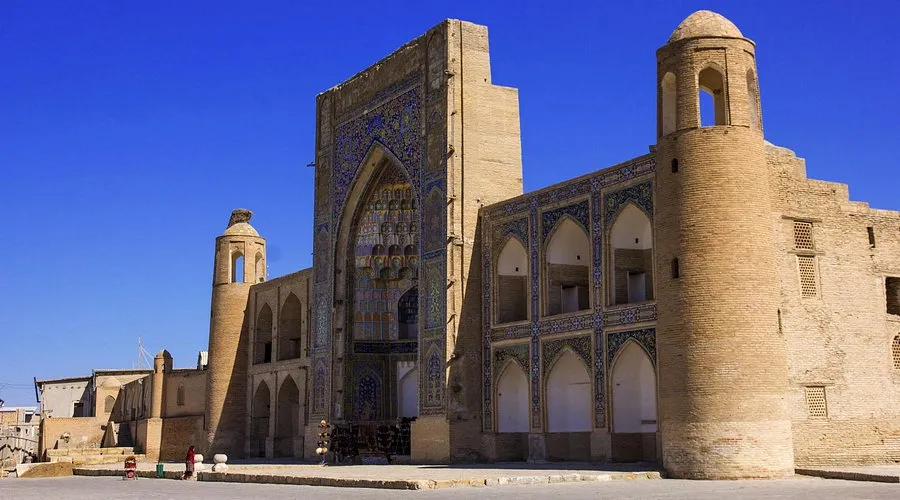
Abdulaziz-Khan Madrasah in Historic Bukhara
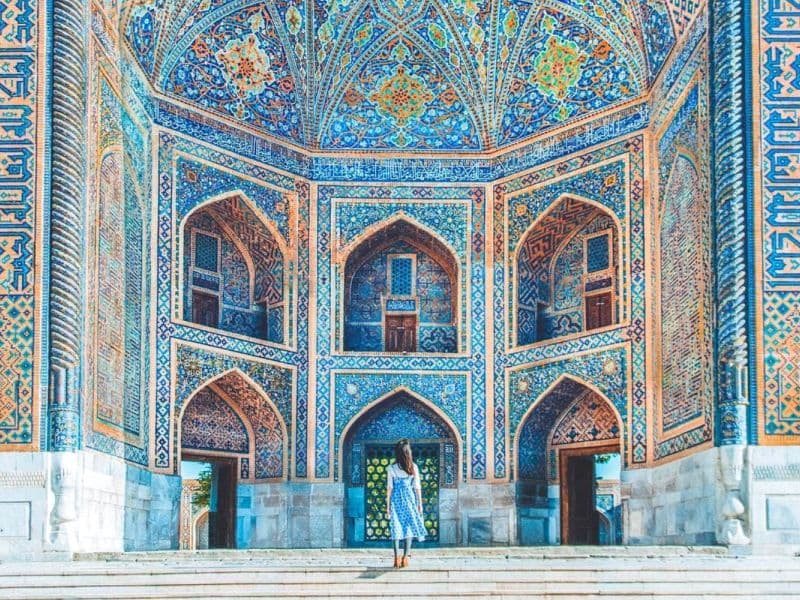
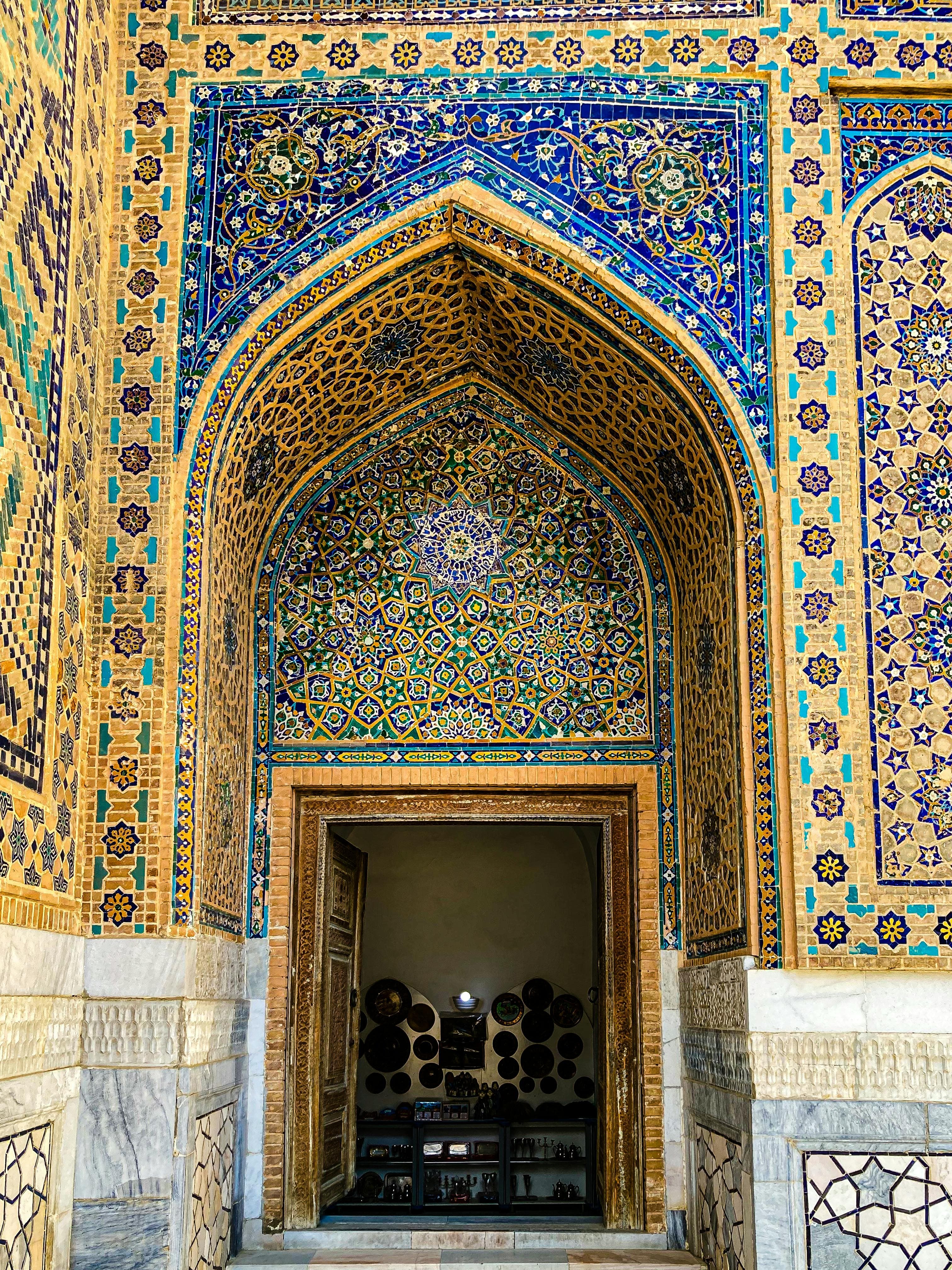
Few places in Bukhara capture the Silk Road’s theatrical flair like the Abdulaziz-Khan Madrasah (1652), a triumph of color, craft, and confidence. Standing opposite Ulugh Beg’s earlier, austere academy, it forms the famed “paired” ensemble whose dialogue is visual: restraint on one side, exuberance on the other. Step through the towering portal and you meet a kaleidoscope—lapis and saffron tiles, gilded muqarnas that hang like frozen waterfalls, and whimsical birds and dragons peeking from scrolling arabesques, a rarity in Central Asian sacred art.
Behind the lavish façade, a shaded courtyard centers student hujras, a mosque, and a darskhana. Ceilings glow with kundal painting; ganch stucco curls like lace; a cool marble mihrab gathers the eye. Epigraphic bands—Quranic verses and poetic maxims—thread across walls, while carved doors and painted niches prove how wood, plaster, and glaze can sing together.
Highlights:
- Monumental iwan with shimmering mosaics and deep muqarnas.
- Darskhana with refined acoustics and painted ceilings.
- Marble mihrab and intricate ganch stucco arabesques.
- Striking contrast with Ulugh Beg Madrasah across the square.
Visiting tips:
- Come at golden hour when the tiles ignite with warm light.
- Dress modestly; some spaces may be used for worship.
- Bring cash for combined museum tickets and local crafts.
- Hire a guide to decode motifs, dynasties, and symbolism.
Plan tailor-made Silk Road adventures and guided visits here