September 12, 2025 · 1 min read
Best Known Representatives of Uzbek Art
Uzbek art is a living mosaic: vivid miniatures, lyrical landscapes, bold avant‑garde canvases, and craft traditions that turn everyday objects into beauty. If you're looking for the best known representatives of Uzbek art—names, styles, and where to see their work—this guide gathers the essentials in one place. For a deeper dive into crafts and techniques, see this helpful overview from Minzifa Travel: Arts and Crafts of Uzbekistan: Traditions and Styles.
Strong foundations, clear names, and places to visit—that's how to explore this scene with confidence.
Who are the best known representatives?
- Kamoliddin Behzod (Bihzad) – Though centered in Herat and Tabriz, his Timurid‑era miniature painting shaped the Central Asian visual language and inspired the Bukhara school in present‑day Uzbekistan.
- Mahmud Muzahhib – A 16th‑century master linked to Bukhara miniatures; elegant composition, balanced color, and fine detail.
- Alexander Volkov – A pillar of the "Turkestan avant‑garde." His works fuse local light and geometry; look for rhythmic, sun‑drenched compositions.
- Usto Mumin (Alexander Nikolaev) – Painter and muralist; poetic portraits and fresco cycles that became symbols of 20th‑century Uzbek art.
- Ural Tansykbaev – Landscape painter known for saturated color and clear structure, capturing steppe horizons and mountain light.
- Chingiz Akhmarov – Muralist whose ceramic panels and mosaics, including in Tashkent's "Kosmonavtlar" metro station, blend epic themes with graceful figures.
- Rakhim Akhmedov – People's Artist of Uzbekistan; refined portraiture and a calm, dignified tone.
- Javlon Umarbekov – Painter and teacher; lyrical color and a humanistic focus that bridges generations.
Masters of applied arts
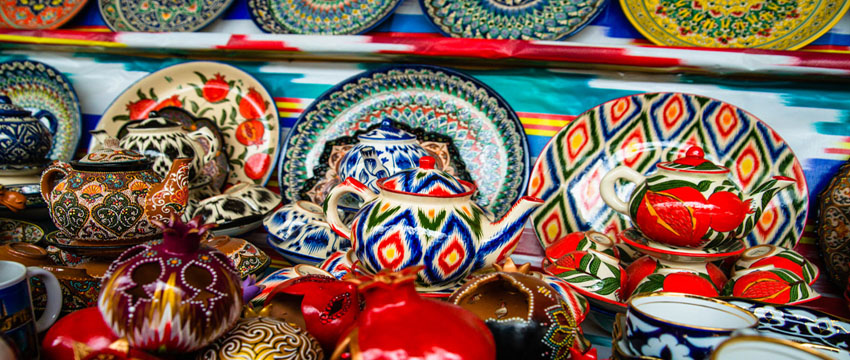
- Rustam Usmanov (Rishtan ceramics) – Cobalt‑turquoise glazes, floral arabesques, and classic shapes from the Ferghana Valley's pottery heartland.
- Alisher Nazirov (Gijduvan ceramics) – Earthy forms and strong ornament rooted in a centuries‑old local school.
- Usto Shirin Muradov (wood carving) – Ornamental carving for major public buildings; a benchmark for architectural decor.
- Suzani embroidery collectives (Bukhara, Nurata) – Bold, sun‑like medallions, pomegranates, and vines stitched in silk on cotton or home‑woven cloth.
- Margilan silk weavers (Yodgorlik) – Adras and ikat techniques that turn natural silk and dyes into luminous textiles.
Why these figures matter
- They codified visual languages—miniature composition, rhythmic ornament, and a balanced palette—that still guide artists today.
- They kept crafts alive through change, from royal courts to workshop dynasties and modern studios.
- They built bridges between local tradition and global art currents, creating a style you can recognize at a glance.
Where to see their work in Uzbekistan
- State Museum of Arts of Uzbekistan (Tashkent) – A clear starting point for fine art and applied art collections.
- Nukus Museum (Savitsky Museum, Karakalpakstan) – Home to the famed collection of Central Asian and "unofficial" Soviet‑era art, including Volkov and peers.
- Tashkent Metro – "Kosmonavtlar" station for Akhmarov's panels; a rare public‑art gallery underground.
- Historic cities and workshops – Rishtan for ceramics, Gijduvan for pottery studios, Margilan for silk, Bukhara for wood carving and suzani.
Short profiles to remember
- Behzod and Muzahhib: miniature masters. Think meticulous brushwork and layered narrative scenes.
- Volkov and Usto Mumin: modern pioneers. Expect geometry, light, and a poetic gaze.
- Tansykbaev and Akhmedov: color, landscape, and portraiture with quiet strength.
- Akhmarov: public murals and mosaics that define urban space.
- Usmanov and Nazirov: ceramics that carry local soil and sky in their glazes.
Practical tips for seeing more
- Pair museums with workshops. A day that combines the State Museum of Arts and a working studio in Rishtan or Gijduvan gives both context and craft in action.
- Look for museum labels that mention "Bukhara school," "Rishtan," or "Gijduvan." These keywords signal style and origin.
- Plan routes by theme: one day for fine art (Volkov, Usto Mumin), one for public art (Akhmarov, metro), and one for crafts (ceramics, silk, suzani).
Want background on styles, motifs, and techniques? This guide from Minzifa Travel is a solid companion when planning a trip or curating a reading list: Arts and Crafts of Uzbekistan: Traditions and Styles.
FAQ
- Is Behzod "Uzbek" or "Persian"? He worked in Herat and Tabriz under Timurid and Safavid courts. His legacy, however, strongly influenced the Bukhara school and the wider Central Asian miniature tradition, so he is often referenced in Uzbekistan's art history.
- Are crafts part of "art" here? Yes. In Uzbekistan, applied arts—ceramics, silk, wood—have long held equal cultural weight with painting and sculpture.
A final word
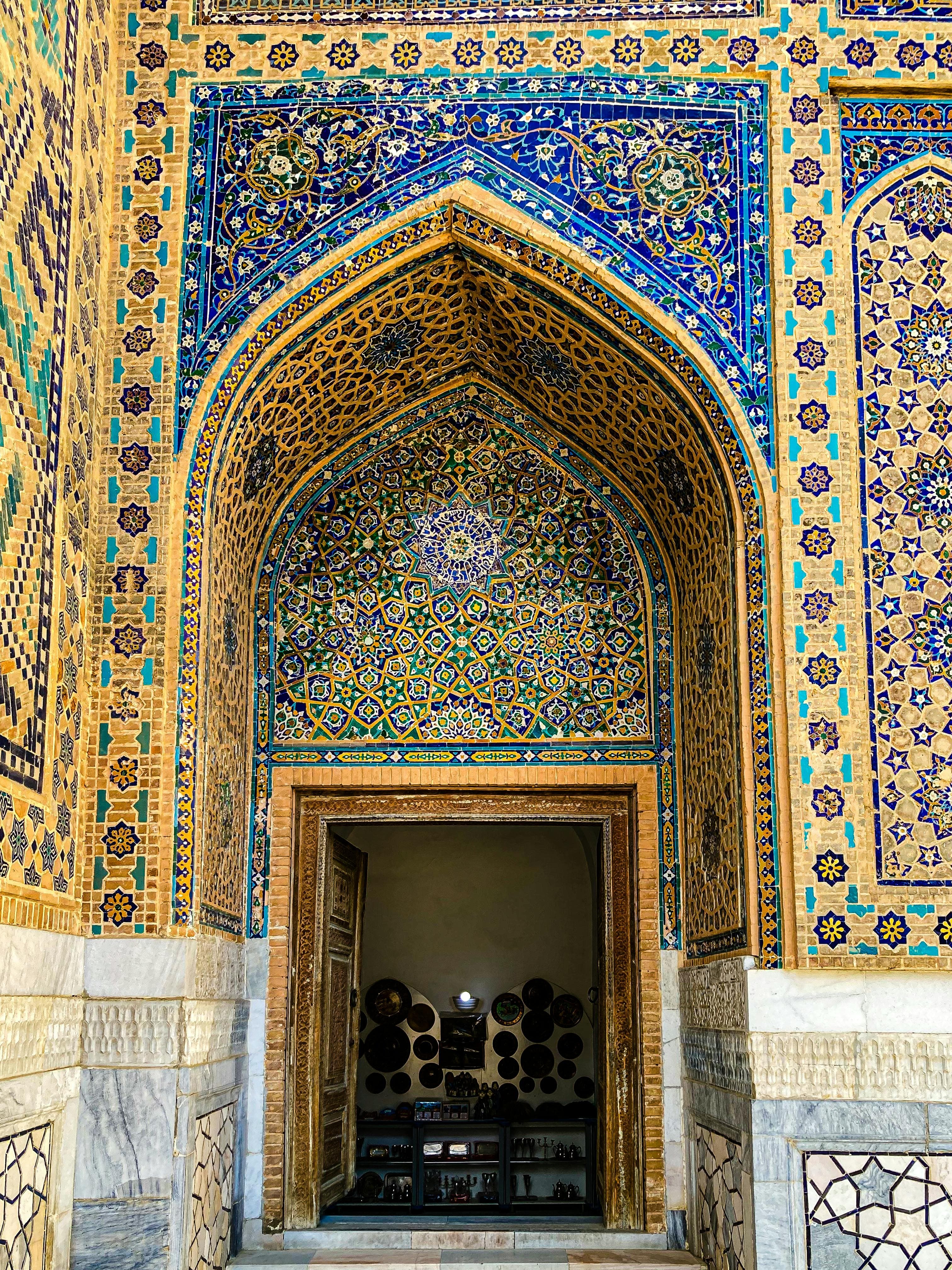
If you remember just a few names—Behzod, Volkov, Usto Mumin, Tansykbaev, Akhmarov, and the ceramic dynasties of Rishtan and Gijduvan—you'll already have a firm map of Uzbek art. The rest is about seeing the work in person, watching a potter shape a bowl, or standing under a mosaic that turns light into color.