September 8, 2025 · 1 min read
Famous Craft Masters of Uzbekistan: A Practical Guide
Meet the best-known craft masters of Uzbekistan
Uzbekistan's crafts are living traditions passed from ustoz (master) to shogird (apprentice). Ceramics, silk ikat, suzani embroidery, woodcarving, metalwork, and knife-making are not souvenirs—they are skills refined over generations. This guide highlights respected names, key schools, and simple ways to meet artisans in their workshops. For a broader overview with routes and tips, start with this helpful guide: Traditional Arts and Crafts of Uzbekistan.
Ceramics you should know
Rishtan (Fergana Valley): Famous for sky-blue ishkor glazes and floral patterns.
- Notable masters: Alisher Nazirov; Rustam Usmanov. Their workshops are known for clean cobalt lines and balanced forms.
- How to recognize: Light, ringing body; stable glaze; hand-painted motifs with slight, natural variation.
Gijduvan (Bukhara region): Earthy palettes and bold geometry.
- Notable: The Narzullaev family (multi-generation school and museum). Expect ochres, greens, stylized birds and pomegranates.
Tashkent school: Contemporary shapes anchored in classic technique.
- Notable: The Rakhimov family studio, known for reviving historic forms with modern precision.
Silk ikat (atlas and adras) from Margilan
- What to expect: Hand-dyed warp threads create blurred, cloud-like patterns. Atlas is silk; adras is silk–cotton.
- Notable master: Rasuljon Mirzaakhmedov (associated with traditional Margilan techniques and training apprentices).
- How to recognize: Soft edges in the pattern, slight irregularities, natural drape. Machine prints look flat and too perfect.
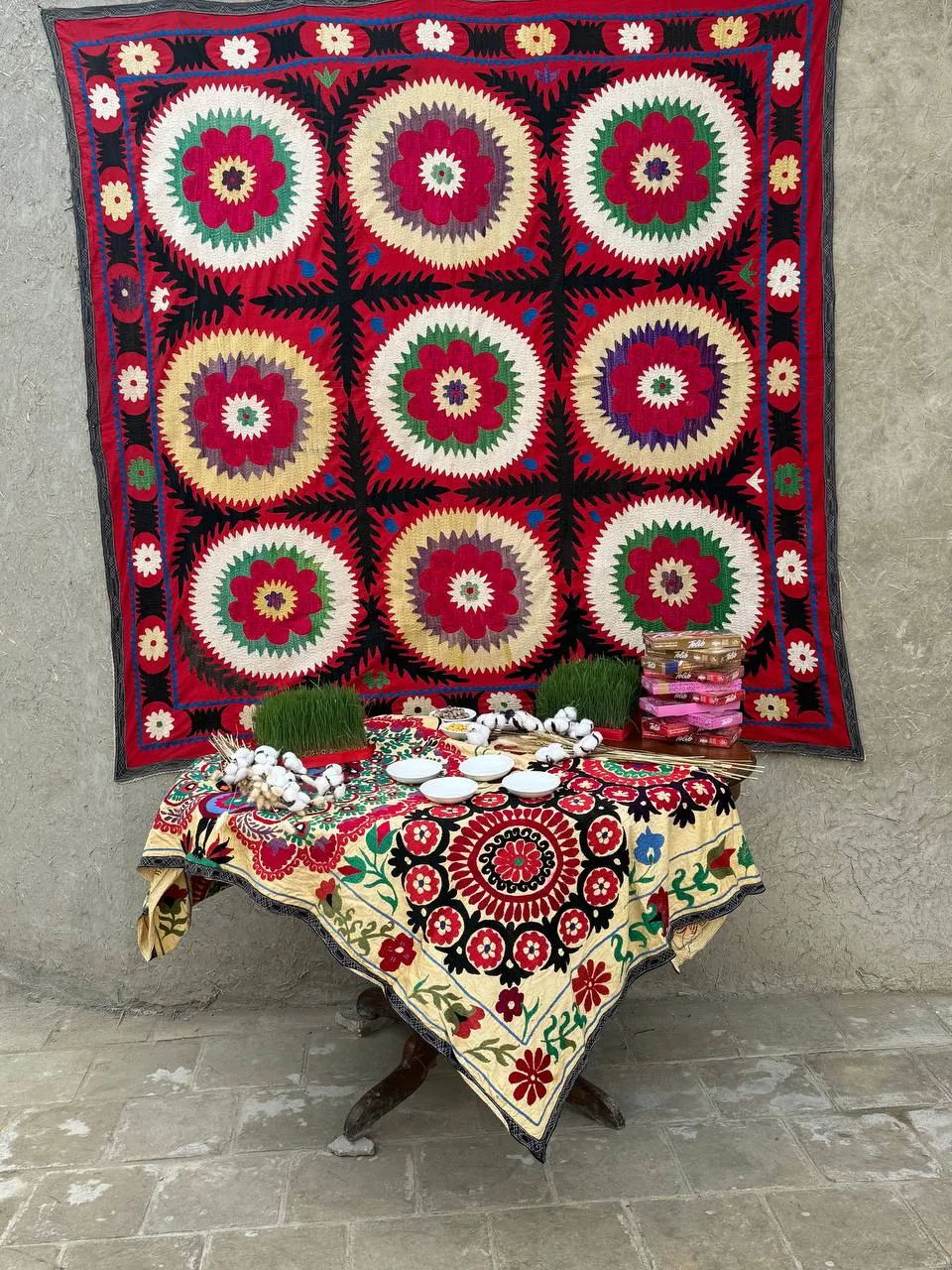
Suzani embroidery (Bukhara, Samarkand, Nurata)
- Style: Sun and pomegranate motifs, chain stitch, rich reds and indigo.
- Workshops: Many are women-led cooperatives keeping family patterns alive.
- Tip: Hand-embroidered pieces have subtle thread tension changes and a tidy, not identical, backside.
Woodcarving (Khiva, Kokand, Tashkent)
- Pillars, doors, and Qur'anic stand replicas are typical.
- Look for depth, symmetry, and clean undercuts. Good pieces feel balanced and sit flat.
Metalwork and knives
- Bukhara: Chased brass and silver jewelry draw on geometric and floral themes.
- Chust (Namangan): Knifemaking with horn handles and inlaid sheaths. Seek a maker's mark and fit-tight scabbards.
Quick profiles at a glance
- Alisher Nazirov — Rishtan ceramics, classic ishkor glaze, teaching lineage.
- Rustam Usmanov — Rishtan ceramics, refined shapes and cobalt work.
- Narzullaev family — Gijduvan ceramics, museum-workshop and school.
- Rakhimov family — Tashkent ceramics, heritage forms with modern accuracy.
- Rasuljon Mirzaakhmedov — Margilan ikat, traditional dyeing and loom work.
These names are examples—Uzbek crafts are broader than any list. Many excellent masters work quietly in family studios; meeting them in person is often the best way to learn.
Planning your route
- Tashkent: Studios and museums for context.
- Margilan (Fergana Valley): Ikat workshops and bazaars.
- Rishtan: Ceramic workshops (Nazirov, Usmanov) and kiln visits.
- Bukhara and Gijduvan: Narzullaev school, suzani ateliers, metalwork.
- Khiva: Woodcarving studios and architectural carving.
For practical stops, workshop etiquette, and buying tips, bookmark this guide: Traditional Arts and Crafts of Uzbekistan.
How to buy authentically and ethically
- Ask about the process: materials, firing, dyeing, and time spent.
- Prefer signed or stamped works; note the workshop name.
- Expect natural variation; exact symmetry usually means machine-made.
- Pay fair prices directly to artisans when possible.
- Pack safely: ceramics in clothing; textiles rolled, not folded; knives checked in luggage.
FAQ
- Are workshops open to visitors? Many are—call ahead or ask at local museums and hotels.
- Can I ship items? Most studios can arrange shipping; keep receipts and contacts.
- Is bargaining okay? Yes, but be respectful; handwork takes time and skill.
Uzbek crafts are part of daily life, not a trend. Meeting masters in their own spaces turns a purchase into a story you can share—and helps the tradition thrive.