October 10, 2025 · 1 min read
Famous Nomads in History: Peoples and Leaders
Who counts as a "famous nomad"? In history, nomads were mobile communities—pastoralists, steppe confederations, sea nomads, and traders—whose economies and cultures depended on movement. Some built vast empires; others shaped trade, warfare, and ideas without ever founding a state.
Quick answer: the most famous nomads
- Genghis Khan and the Mongols (with Kublai Khan, Batu Khan)
- Attila and the Huns
- Scythians and Sarmatians
- Early Turkic confederations (Göktürks), later Seljuks with nomadic roots
- Timur (Tamerlane), a Turco‑Mongol conqueror
- Bedouin tribes of Arabia
- Berbers and Tuareg of the Sahara
- Magyars (early Hungarians)
- Xiongnu of Inner Asia
For a focused look at Central Asian traditions and peoples, see Nomadic peoples of Central Asia: history & today.
Why they mattered
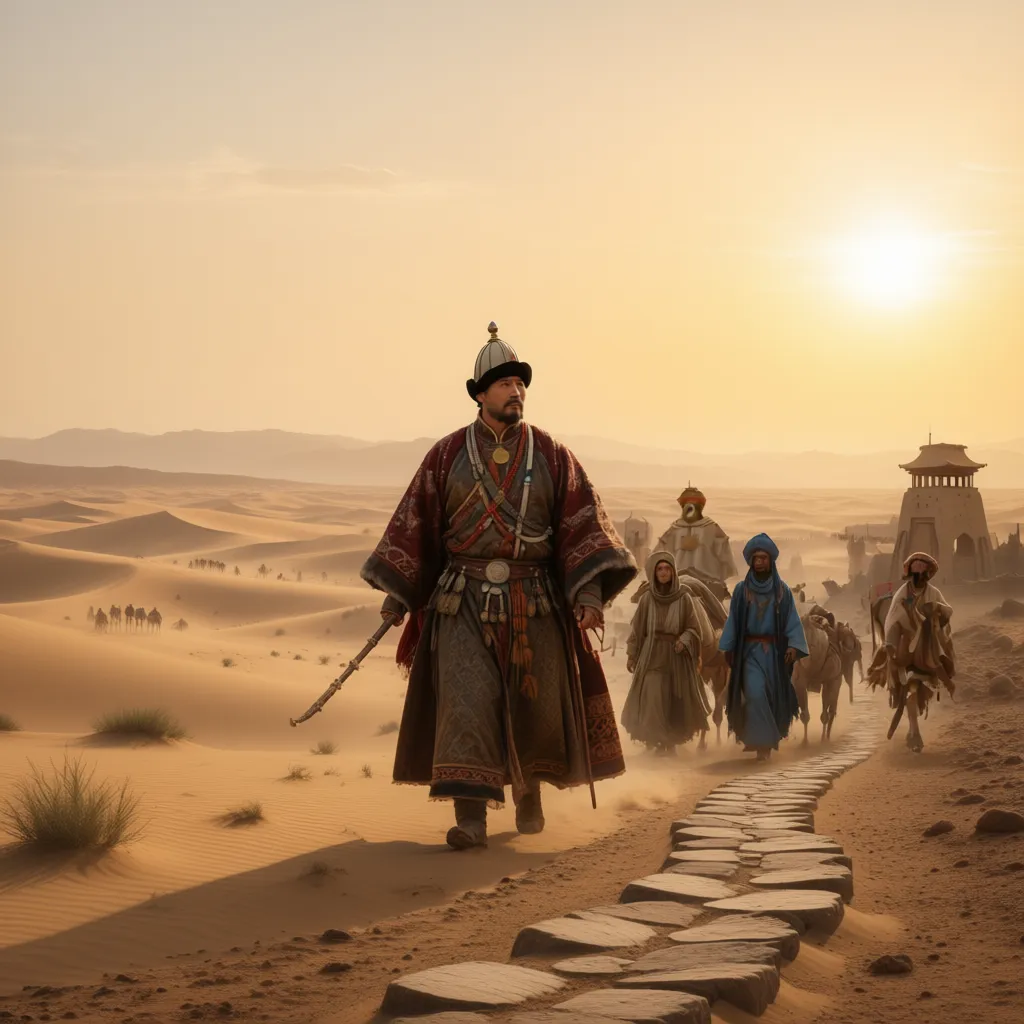
Nomads excelled at mobility, horse archery, and logistics. They linked Eurasia through the steppe corridors and the Silk Road, moved technology (stirrups, composite bows), and set up fast communication systems (like the Mongol yam). Their impact shows in trade patterns, languages, military tactics, and political maps.
The steppe world, at a glance
- Scythians (c. 8th–3rd c. BCE): famed horse archers of the Black Sea–Eurasian steppe; known from Greek histories and rich kurgan burials.
- Xiongnu (3rd c. BCE–1st c. CE): powerful rivals of Han China; early model of steppe imperial organization.
- Huns (4th–5th c. CE): with Attila, pressured Rome and reshaped late antiquity Europe.
- Göktürks (6th–8th c.): the first Turkic khaganate; script and state traditions that influenced later Turkic states.
- Magyars (9th–10th c.): steppe raiders who settled and founded medieval Hungary.
- Seljuks (11th–12th c.): Oghuz Turkic nomadic origins; later ruled a vast Islamic realm, setting the stage for the Ottomans.
- Mongols (13th–14th c.): Genghis Khan forged the largest contiguous empire; Kublai founded the Yuan in China; Batu led the Golden Horde.
- Timur (14th–15th c.): Turco‑Mongol warlord who united nomadic cavalry and settled administration.
Curious how these histories live on today? This overview of Central Asian nomads is a helpful primer: Nomadic peoples of Central Asia: history & today.
Beyond the steppe
- Bedouins (Arabian deserts): camel pastoralism, poetry, and tribal codes that shaped early Islamic-era mobility and trade.
- Berbers and Tuareg (Sahara): trans‑Saharan caravan networks; distinctive material culture and social organization.
- Sami (Arctic): reindeer herding and seasonal movement in Fennoscandia.
- Maasai (East Africa): cattle pastoralism and age‑set social systems.
- Sea nomads (Bajau, Moken): maritime livelihoods with extended time at sea.
Remarkable women of nomadic history
- Tomyris (Massagetae): the queen who, according to classical sources, defeated Cyrus the Great.
- Töregene Khatun and Sorghaghtani Beki: key Mongol stateswomen who stabilized rule and fostered learning.
- Mandukhai Khatun: 15th‑century Mongol queen who rebuilt political unity on the steppe.
What made nomad powers effective?
- Mobility: fast cavalry and flexible strategies.
- Organization: confederations and merit-based leadership.
- Trade savvy: control of corridors, protection (and taxation) of caravans.
- Adaptation: adoption of siege craft, administration, and religions from neighbors.
Common misconceptions
- "Nomads were only raiders." They raided and traded; many also governed cities and supported artisans and scholars.
- "Nomad history is separate from settled history." In reality, they were intertwined through marriage, diplomacy, war, and commerce.
- "Nomadism vanished." Many communities still practice mobile or semi‑mobile livelihoods today.
Want to dive deeper into Central Asian nomads?
For clear context on peoples from Scythians to Mongols—and how modern communities keep traditions alive—read Nomadic peoples of Central Asia: history & today. It's a solid starting point before books and museum catalogs.
FAQ
- Who is the most famous nomad leader? Genghis Khan is the best‑known globally, with Attila the Hun also widely recognized.
- Which nomad empire lasted longest? The Mongol Empire fragmented quickly, but successor khanates endured for centuries; Turkic states with nomadic roots lasted even longer.
- Are there nomads today? Yes. Examples include Bedouin, Tuareg, Sami, Maasai, and some sea‑nomad groups, often blending mobility with modern livelihoods.