October 16, 2025 · 1 min read
Why Nomadic Peoples Matter in World History
What is the historical significance of nomadic people? In short: mobility reshaped trade, warfare, states, and culture across continents. From the Eurasian steppe to desert routes, nomadic herders connected distant cities, moved ideas faster than walls could stop, and built empires that rewired the map.
For a focused read on Central Asia's living heritage of nomads and cities, explore this guide by Minzifa Travel.
How mobility powered exchange
- Nomadic corridors formed the backbone of Eurasian trade long before paved roads. Steppe routes linked the Black Sea, the Altai, and the oases of Transoxiana.
- The Silk Road thrived where caravans met herders. Horses, sheep, and security were provided by steppe peoples; cities like Samarkand and Bukhara handled finance, crafts, and storage.
- Under the Mongols, relay stations (yam), passports (paizi), and standardized protections created the most reliable long-distance network of its time, moving paper, gunpowder knowledge, textiles, and medical ideas.
Military innovation and strategy
- Composite bows, high saddles, and the stirrup (widely adopted by the 7th–8th centuries) changed how wars were fought. Massed cavalry and feigned retreats forced agrarian empires to rethink defenses and logistics.
- From the Xiongnu and Huns to the Göktürks, Seljuks, and Mongols, steppe warfare emphasized speed, coordination, and intelligence—tactics many states later adopted or countered with new fortifications and mounted forces.
State-building and diplomacy
- Nomadic confederations were not just raiders; many were sophisticated states: the Xiongnu (3rd c. BCE), the Göktürk Khaganate, the Uyghurs, the Khazars, the Seljuks, and the Mongol Empire.
- The Mongol era (13th–14th c.) fostered unprecedented connectivity—often called the Pax Mongolica—standardizing weights, courier systems, and legal practices. Census-taking, merit-based appointments, and religious toleration in many regions helped stabilize vast territories.
Economy, ecology, and resilience
- Pastoral nomadism is an adaptive economy for grasslands and high plateaus (Kazakh steppes, Kyrgyz jailoo, Mongolian plains). Herd mobility protects fragile soils and follows seasonal pastures.
- Risk management—splitting herds, exchanging gifts, and forging alliances—made communities resilient to droughts and harsh winters.
- Nomads traded wool, hides, felt, horses, and salt for grain, textiles, and metalwork, binding together complementary worlds.
Central Asia: the nomad–city partnership
- Oases (Bukhara, Samarkand, Khiva, Kashgar) thrived when they cooperated with surrounding herders who supplied animals, protection, and overland know-how.
- Turkic languages and customs spread across today's Kazakhstan, Kyrgyzstan, Uzbekistan, Turkmenistan, and parts of Xinjiang, shaping music, dress, epics, and hospitality codes.
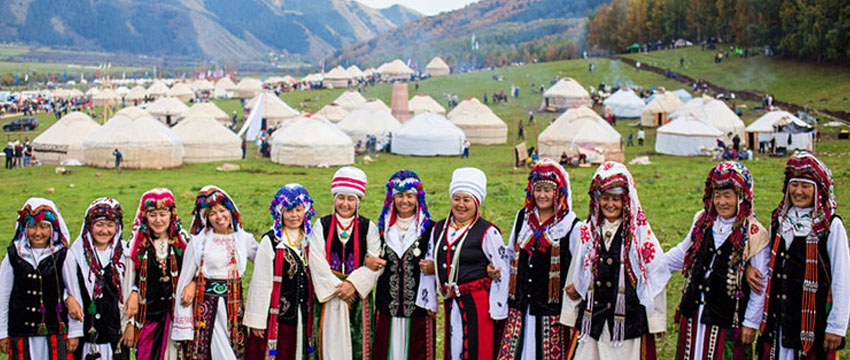
- Traveling there today, you can still see yurts (ger), felt craft, eagle hunting in the Tien Shan and Altai, and caravanserai remains that once hosted both merchants and mounted envoys. For trip ideas and cultural context, see Minzifa Travel's article on nomads and cities.
Culture and belief
- Oral epics (like Manas) preserved history, law, and values; music and storytelling were portable archives.
- Religions moved with riders and caravans. Buddhism traveled across the steppe corridors to China; later, Turkic polities played a major role in the spread and defense of Islam in Central and Western Asia.
- Everyday culture—felt-making, kumis (fermented mare's milk), portable architecture—reflects elegant solutions to life on the move.
Lasting legacies you feel today
- Passports and courier relays have steppe precedents. Modern logistics networks echo old relay logic.
- Place names, loanwords, and the range of Turkic languages from Central Asia to Anatolia trace nomadic migrations and state formations.
- Hybrid identities in frontier zones (steppe–oasis, steppe–forest) are products of long interaction, not brief encounters.
Quick answers
- What defines a nomad? Seasonal mobility tied to herds and pastures, not aimless wandering.
- Were nomads only raiders? No. Trade, diplomacy, protection services, and empire-building were central roles.
- Do nomads still exist? Yes. Many communities remain mobile or semi-nomadic, while others blend herding with urban work and education.
Why it matters now
Understanding nomadic history helps make sense of Eurasian borders, trade routes, and cultural mosaics. It also offers practical lessons in resilience, sustainable land use, and cross-cultural negotiation—skills as relevant to today's supply chains and climate challenges as they were on the medieval steppe.
Ready to dive deeper or plan a culture-rich route through the Silk Road heartlands? Start with Minzifa Travel's overview of Central Asian nomads and cities.